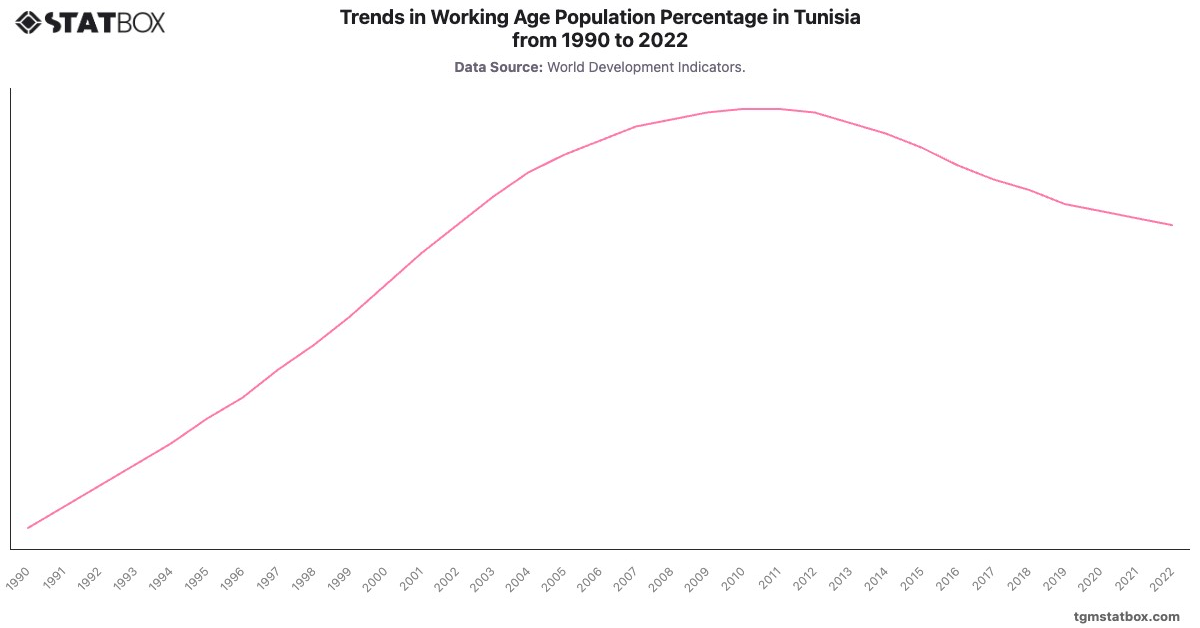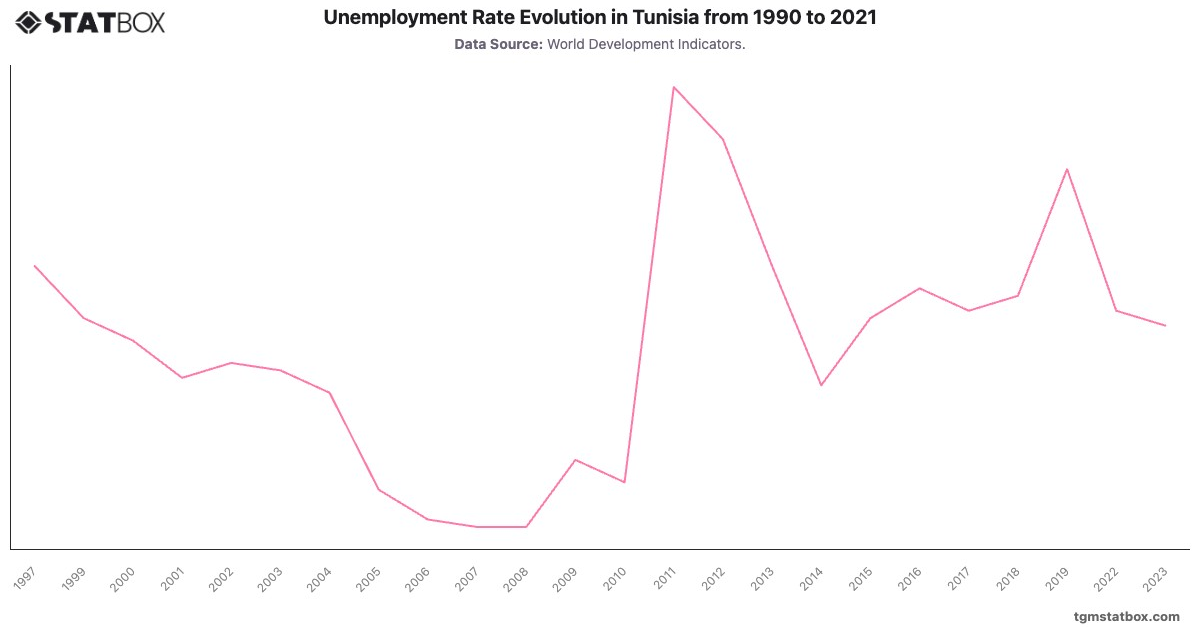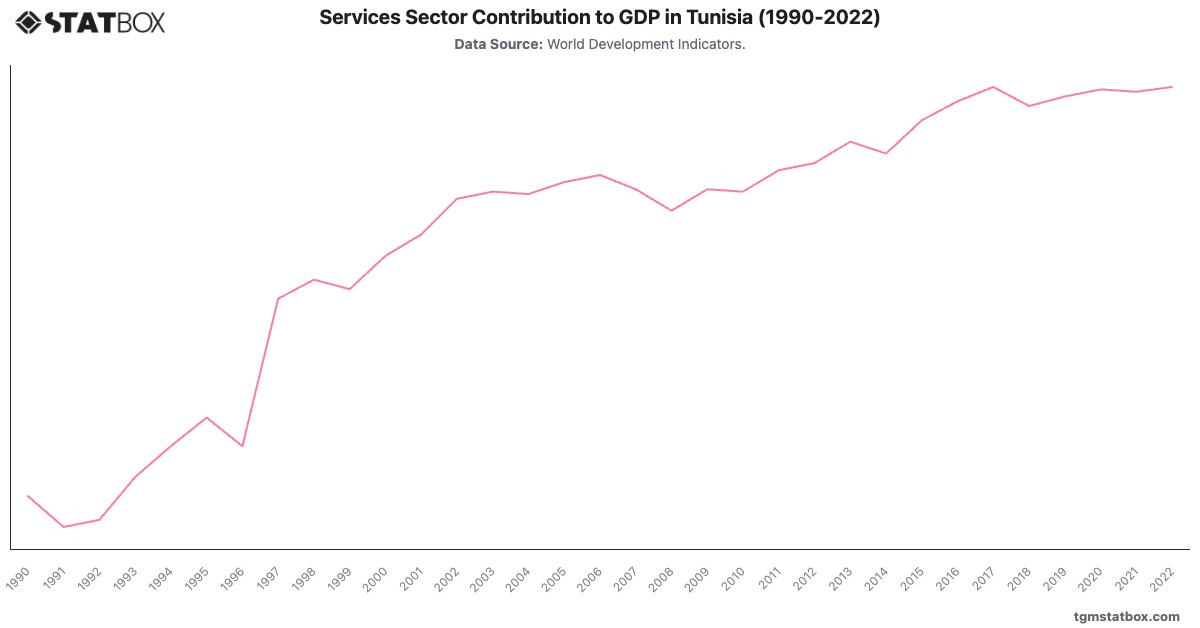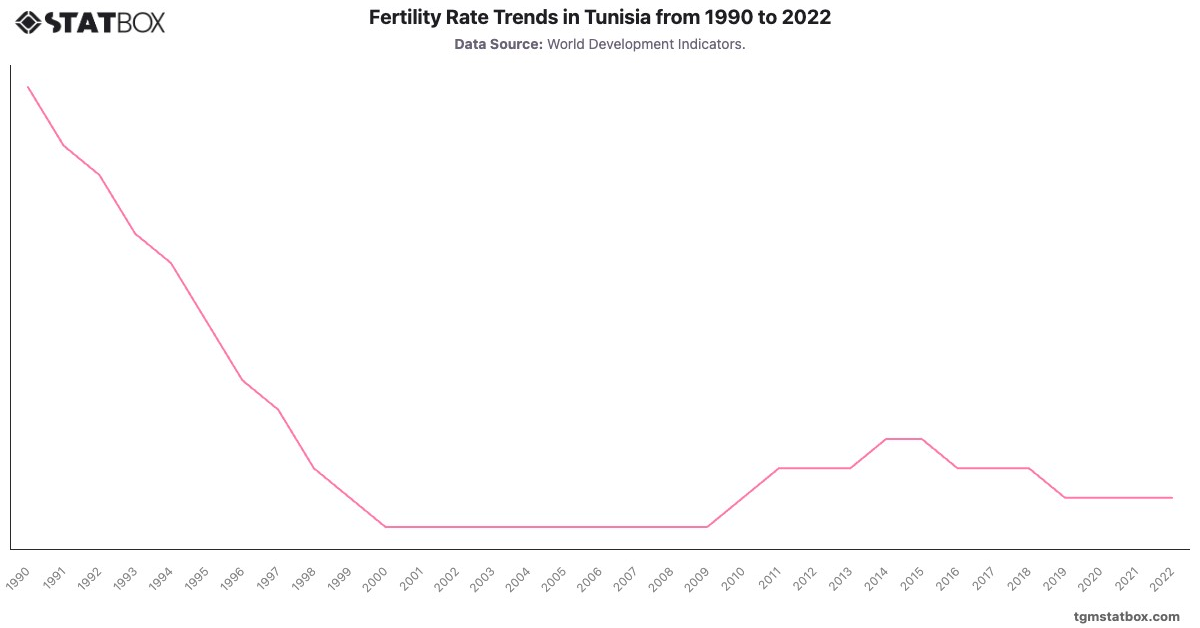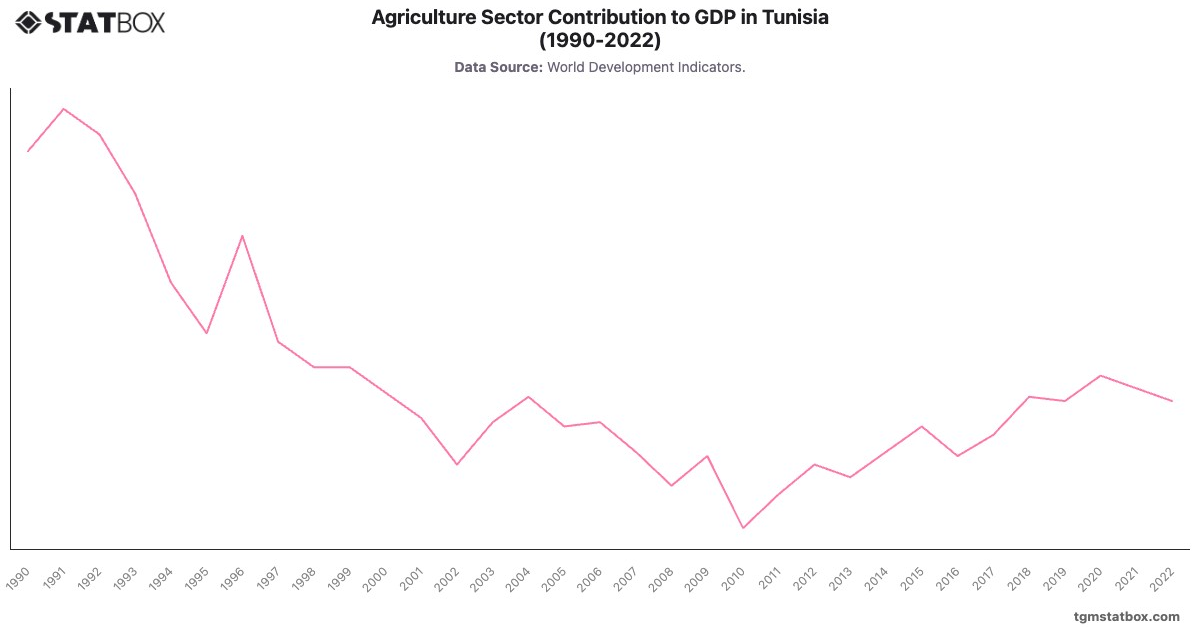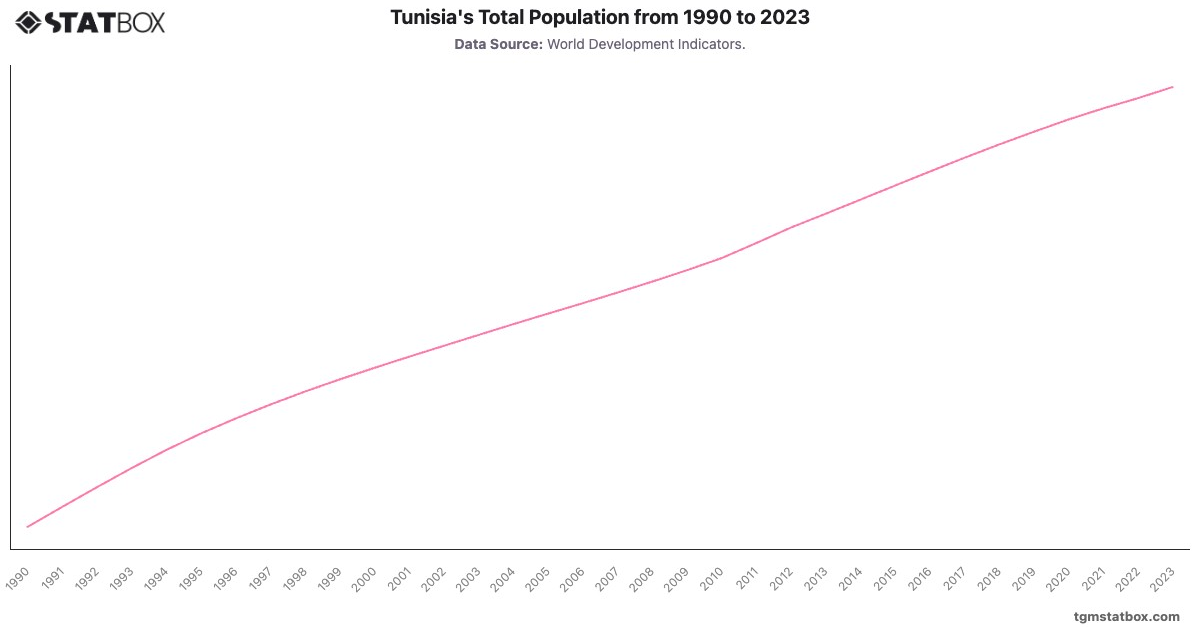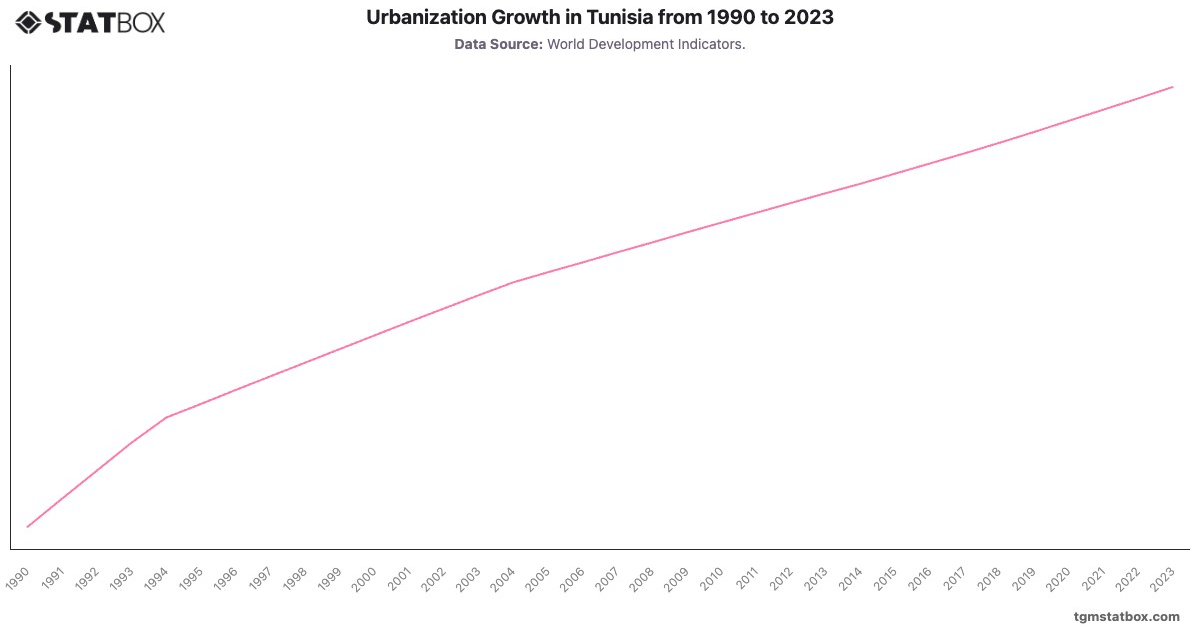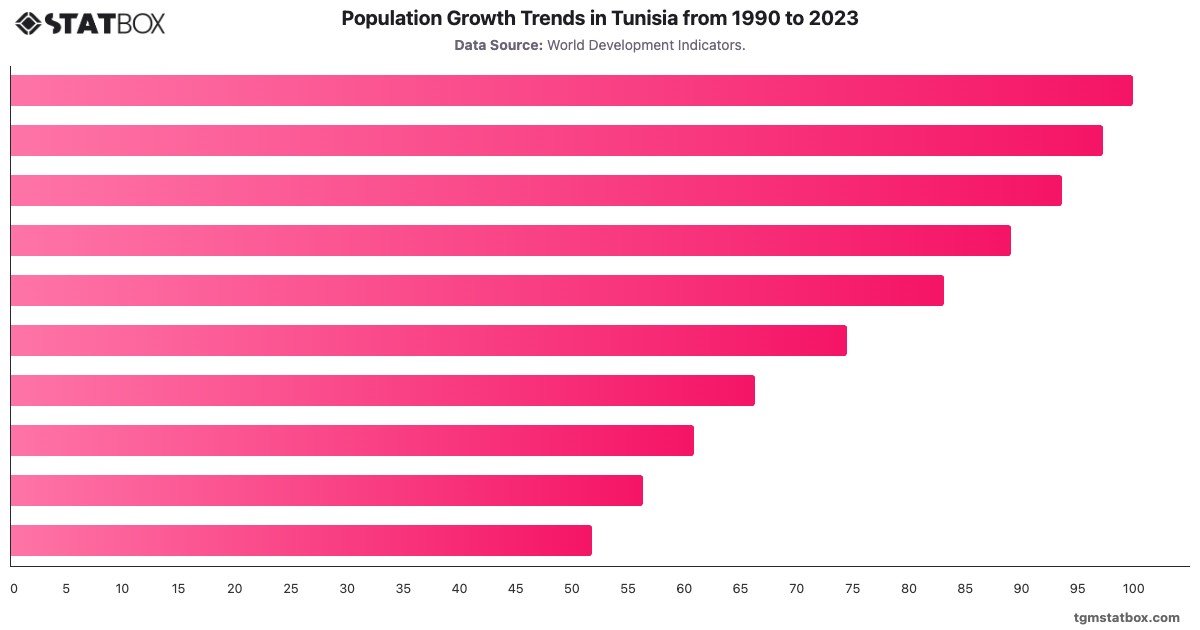
Tunisia's population growth rate has shown a steady decline from in 1990 to in 2023, mirroring broader demographic trends in the region. Growth decreased significantly during the 1990s, reaching by 2000, as fertility rates dropped due to improved family planning services and socio-economic development.
The period from 2010 to 2020 saw relative stability at around , although the political and economic challenges following the Arab Spring may have indirectly affected population dynamics. By 2023, the growth rate settled at , highlighting Tunisia’s progress toward demographic maturity, though challenges remain in sustaining economic growth amidst an aging population.
The period from 2010 to 2020 saw relative stability at around , although the political and economic challenges following the Arab Spring may have indirectly affected population dynamics. By 2023, the growth rate settled at , highlighting Tunisia’s progress toward demographic maturity, though challenges remain in sustaining economic growth amidst an aging population.
For a broader context, visit other statistics on Tunisia’s population total, Tunisia’s fertility rate pattern, Tunisia’s annual GDP growth rate.