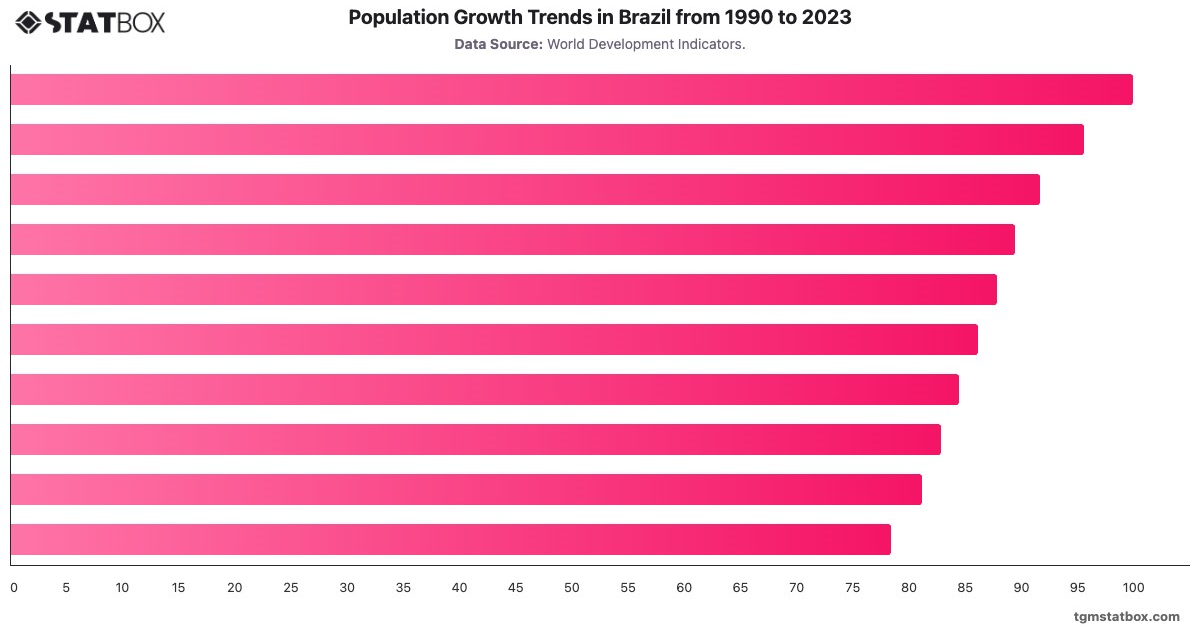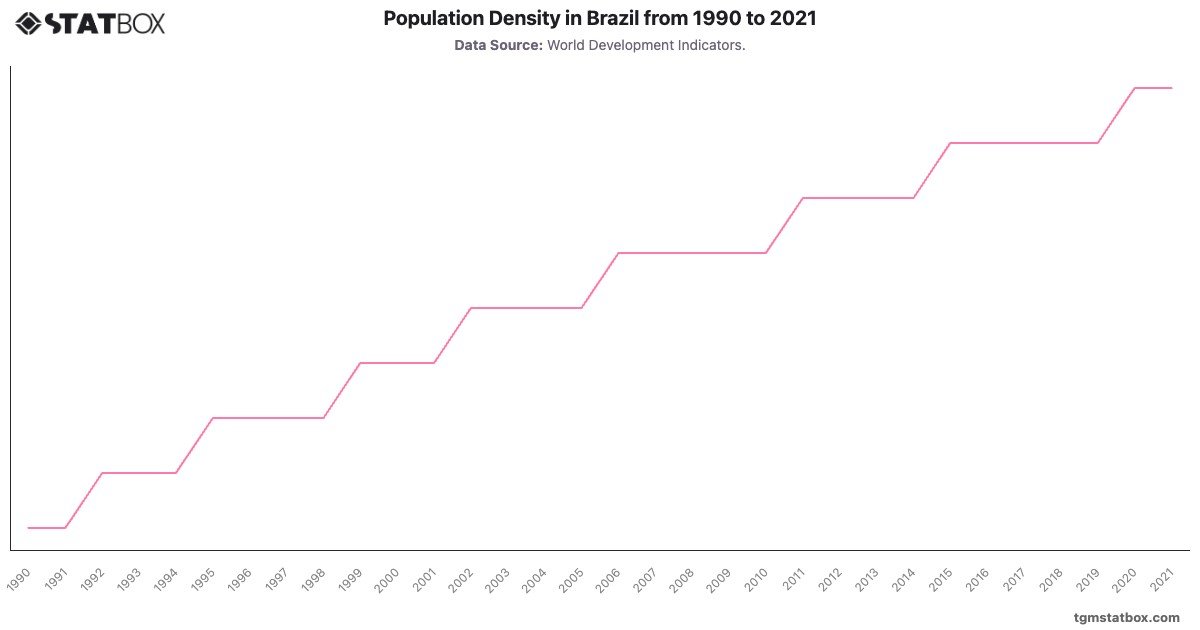
Brazil experienced modest growth in population density, increasing from 18 people per square kilometer in 1990 to 26 in 2021. This gradual increase reflects Brazil's demographic growth, driven by both natural population growth and rural-to-urban migration. By 2000, density reached 21, and steady growth continued, aligning with Brazil’s economic development and urban migration patterns, especially to cities like São Paulo and Rio de Janeiro.
The increase to 26 by 2021 highlights Brazil’s continued urban expansion and population growth, although the vast Amazon and rural areas keep overall density relatively low. Brazil’s density growth illustrates its duality of urban concentration and extensive rural landscapes.
The increase to 26 by 2021 highlights Brazil’s continued urban expansion and population growth, although the vast Amazon and rural areas keep overall density relatively low. Brazil’s density growth illustrates its duality of urban concentration and extensive rural landscapes.
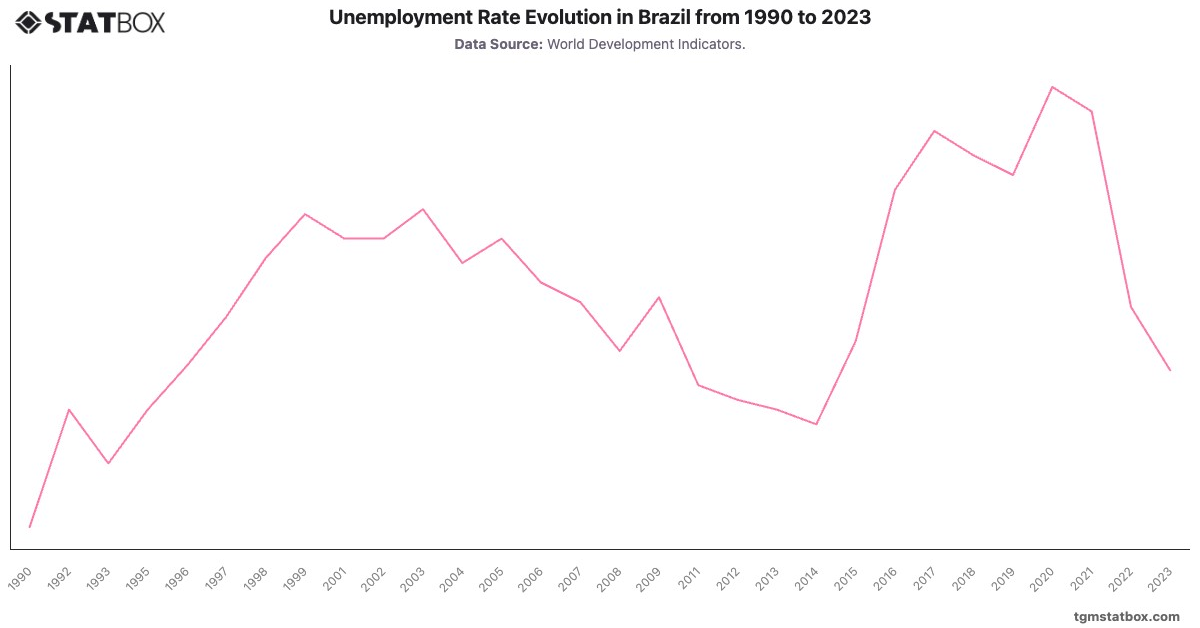
For a deeper dive into the topic, explore Brazil’s unemployment rate, Brazil’s population trends, Brazil’s population trend.