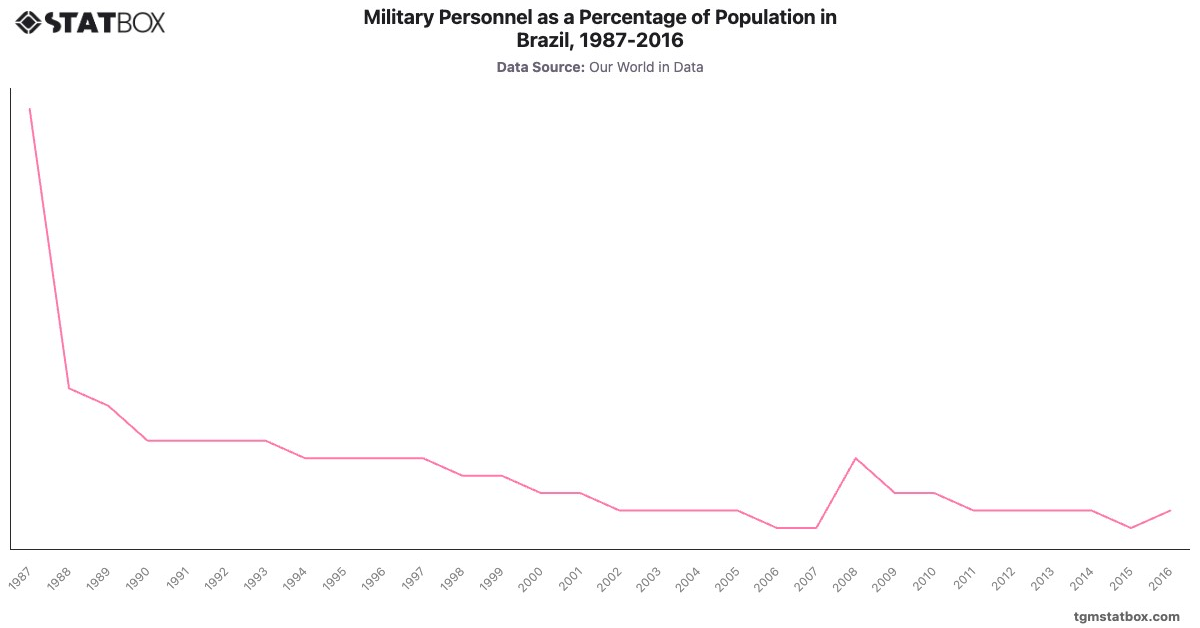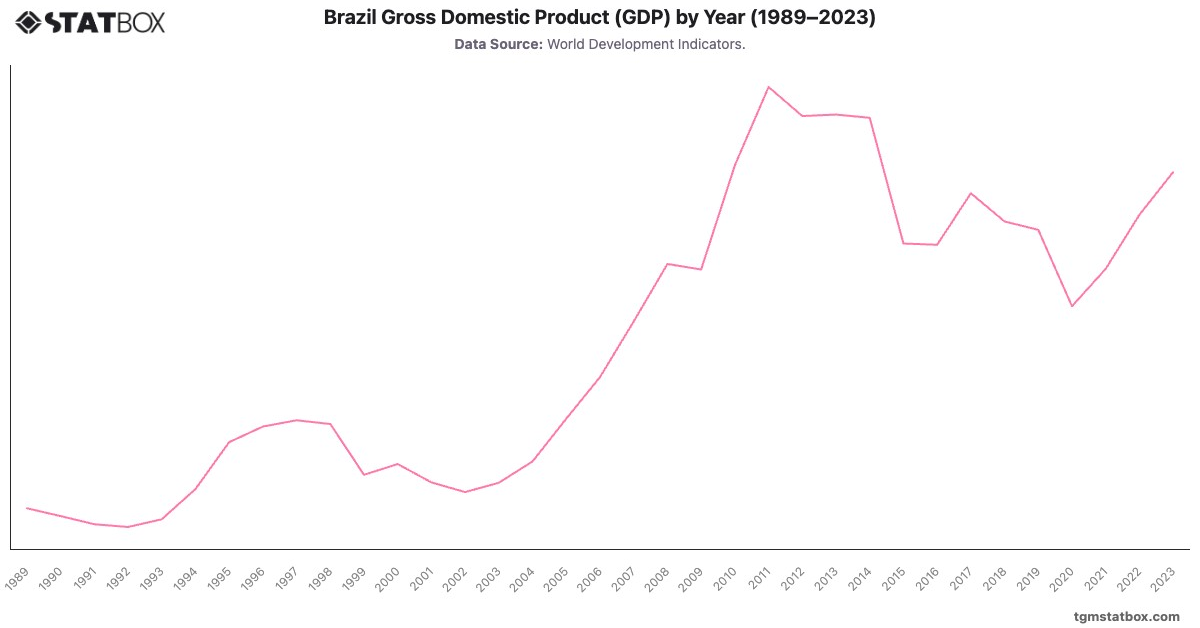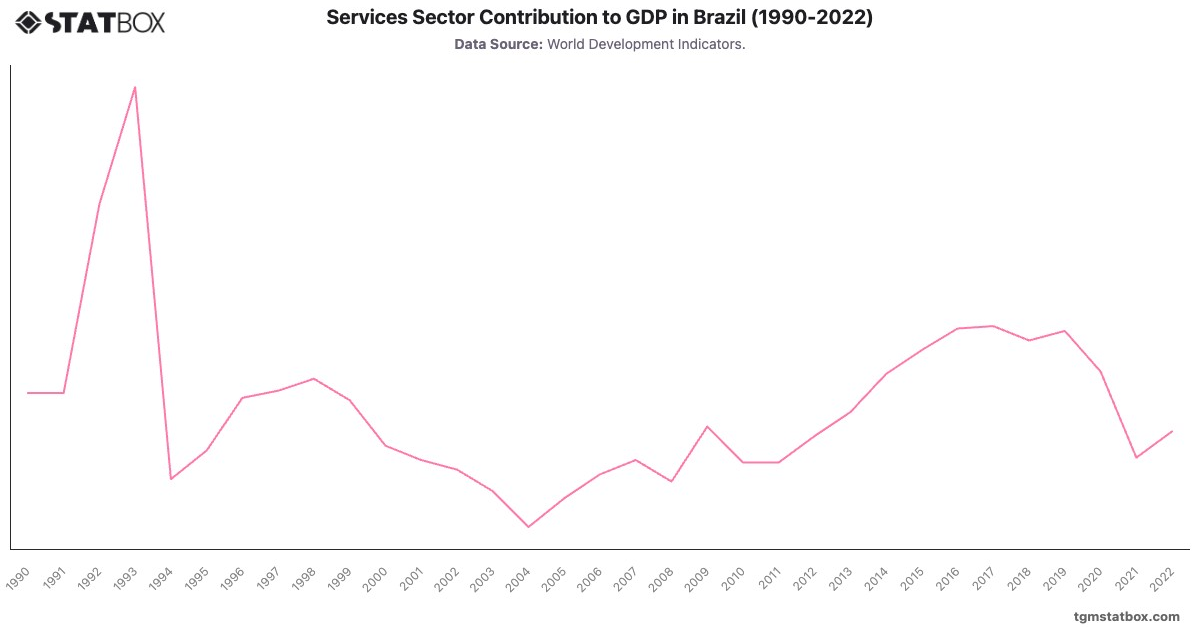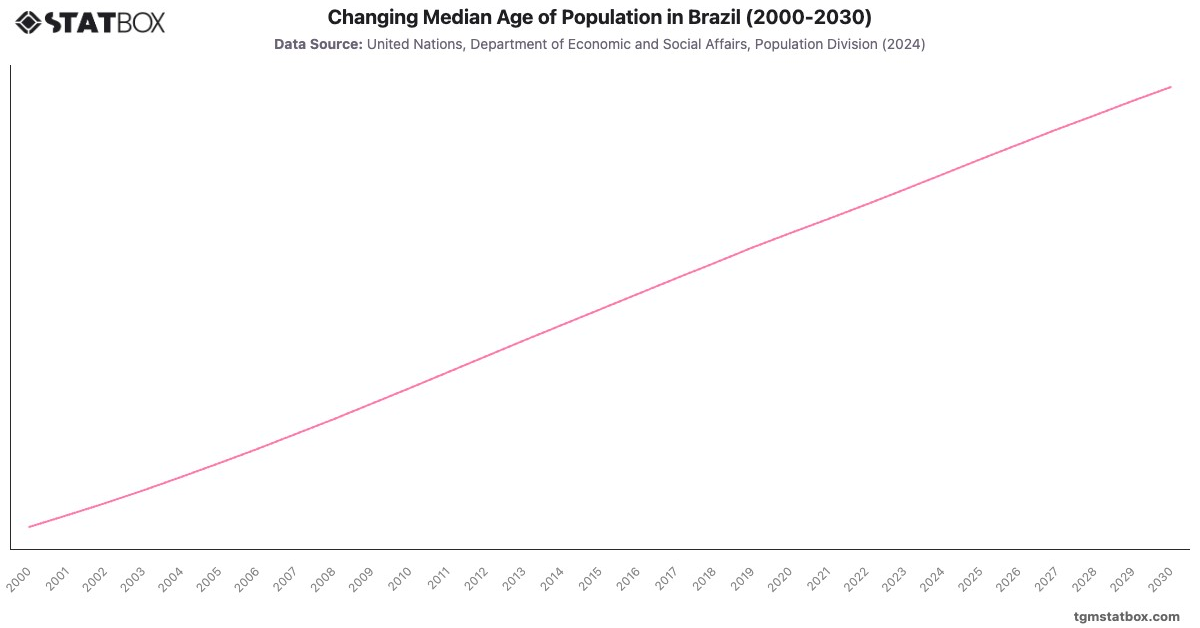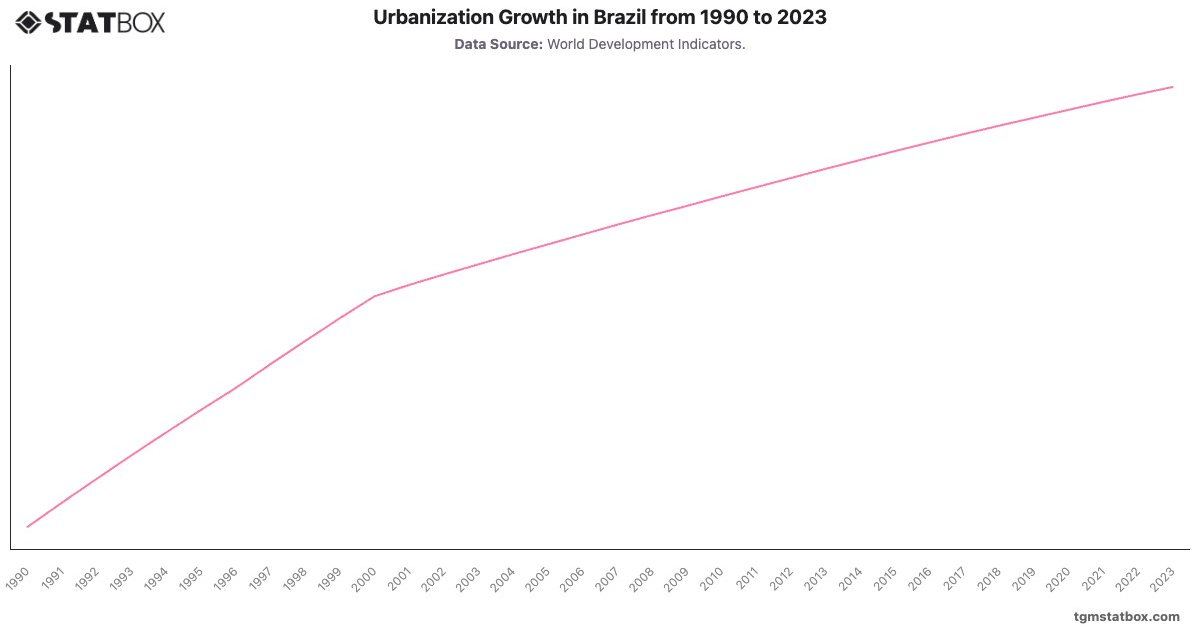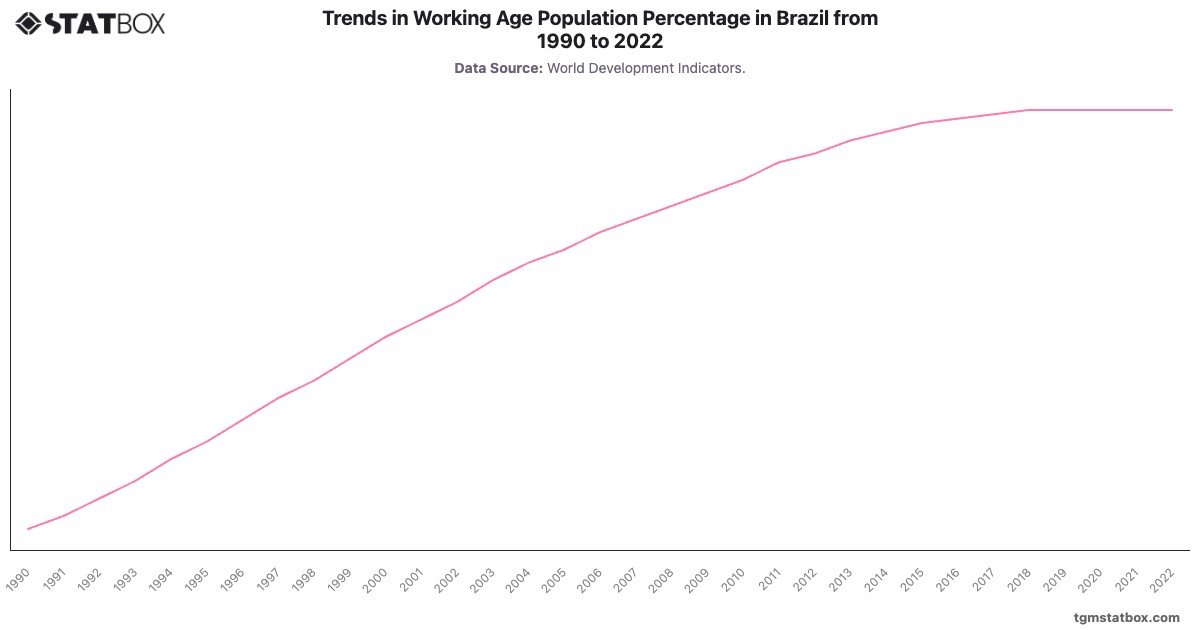
Brazil experienced a consistent rise in its working-age population, starting at in 1990 and peaking at by 2019, where it stabilized through 2022. This growth is attributed to the country’s demographic transition, with lower birth rates leading to a larger proportion of working-age individuals. From the early 2000s, Brazil's economic growth and healthcare improvements further influenced this trend. The steady high percentage post-2019 indicates Brazil's ongoing demographic shift toward a mature workforce.
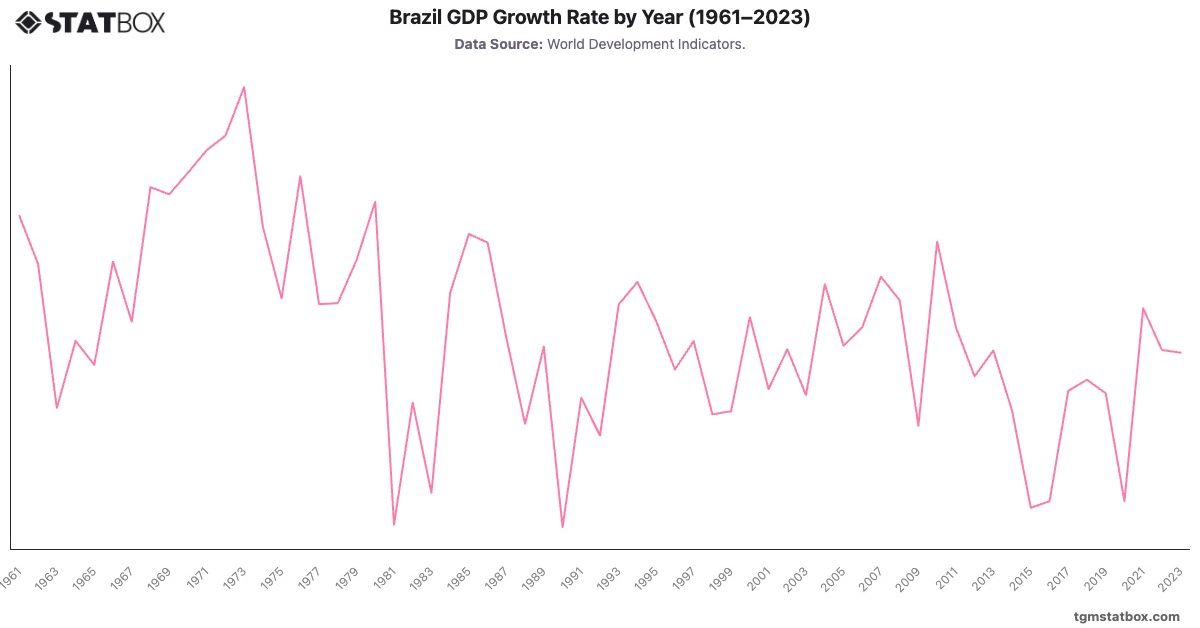
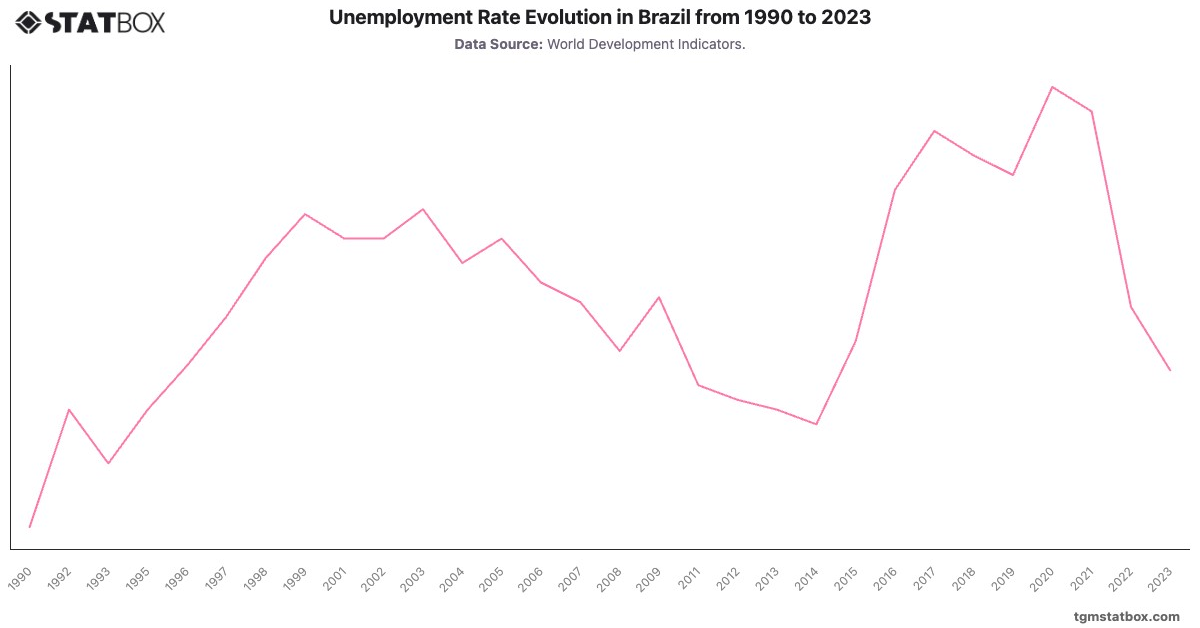
For a broader context, visit other statistics on Brazil’s unemployment rate, Brazil’s population density, Brazil’s annual GDP growth rate.