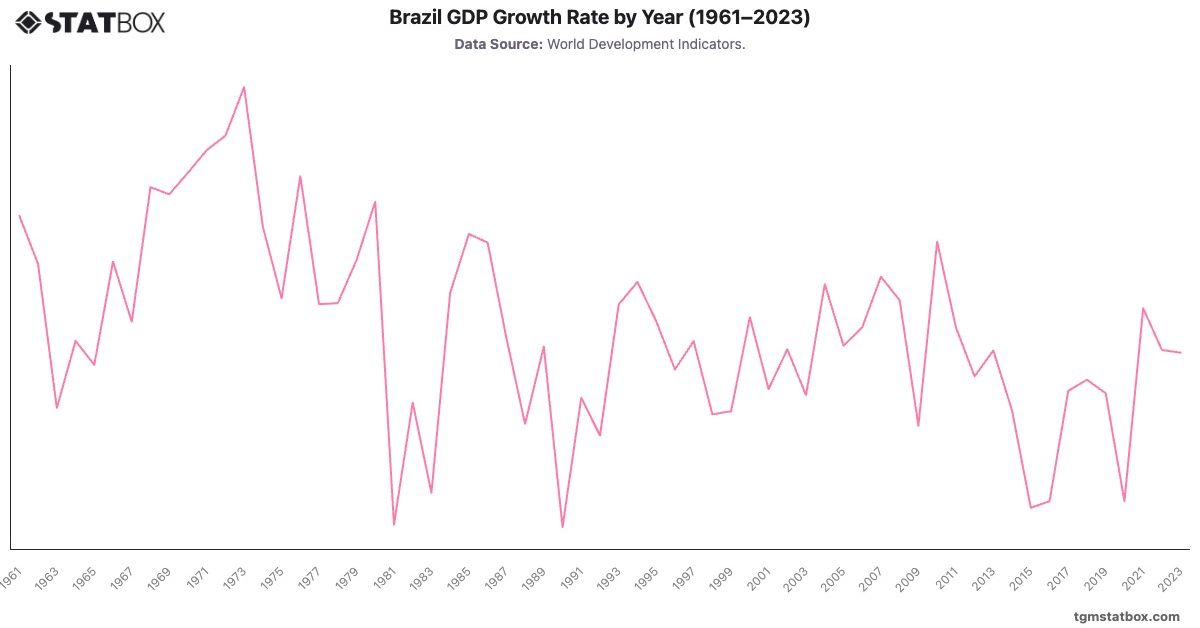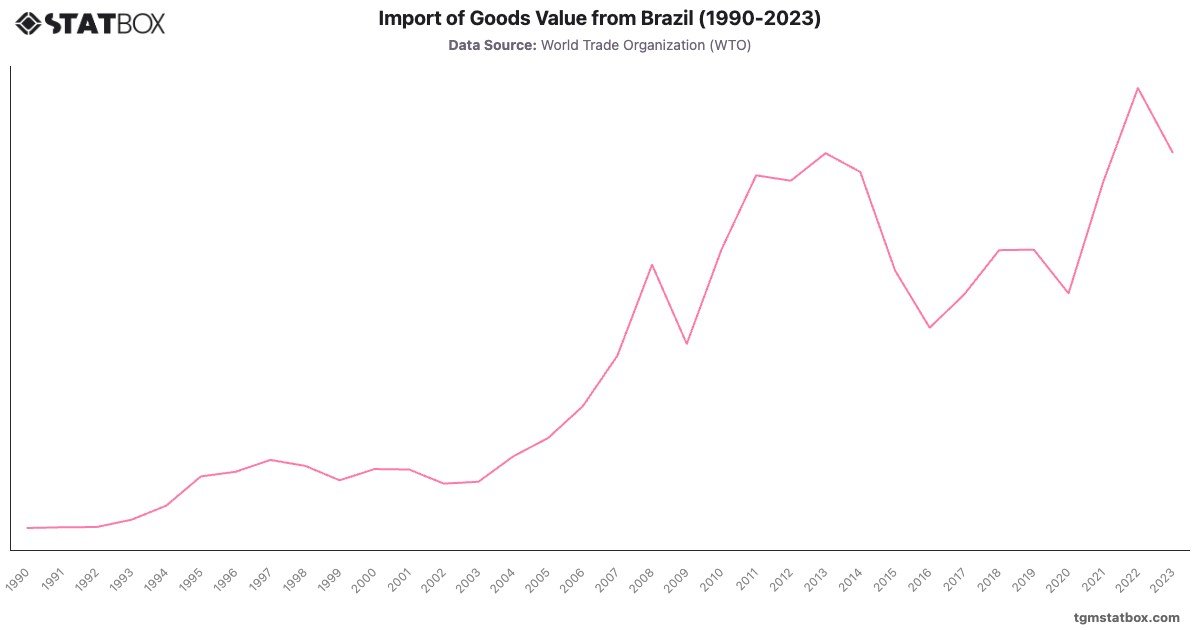
Brazil's imports grew from $22.5B in 1990 to $64.2B in 1997, reflecting economic reforms and trade liberalization. However, the late 1990s financial crises led to fluctuations, with imports falling to $49.7B in 2002. Recovery was robust, with imports reaching $183.9B in 2008, driven by booming commodities and industrial demand.
After a dip in 2015 due to recession, imports rebounded to $292.2B in 2022, fueled by recovery and demand for energy and machinery. The decrease to $252.7B in 2023 reflects adjustments to global and domestic challenges. Brazil's import trends highlight its economic cycles and reliance on industrial and technological imports to support growth.
After a dip in 2015 due to recession, imports rebounded to $292.2B in 2022, fueled by recovery and demand for energy and machinery. The decrease to $252.7B in 2023 reflects adjustments to global and domestic challenges. Brazil's import trends highlight its economic cycles and reliance on industrial and technological imports to support growth.
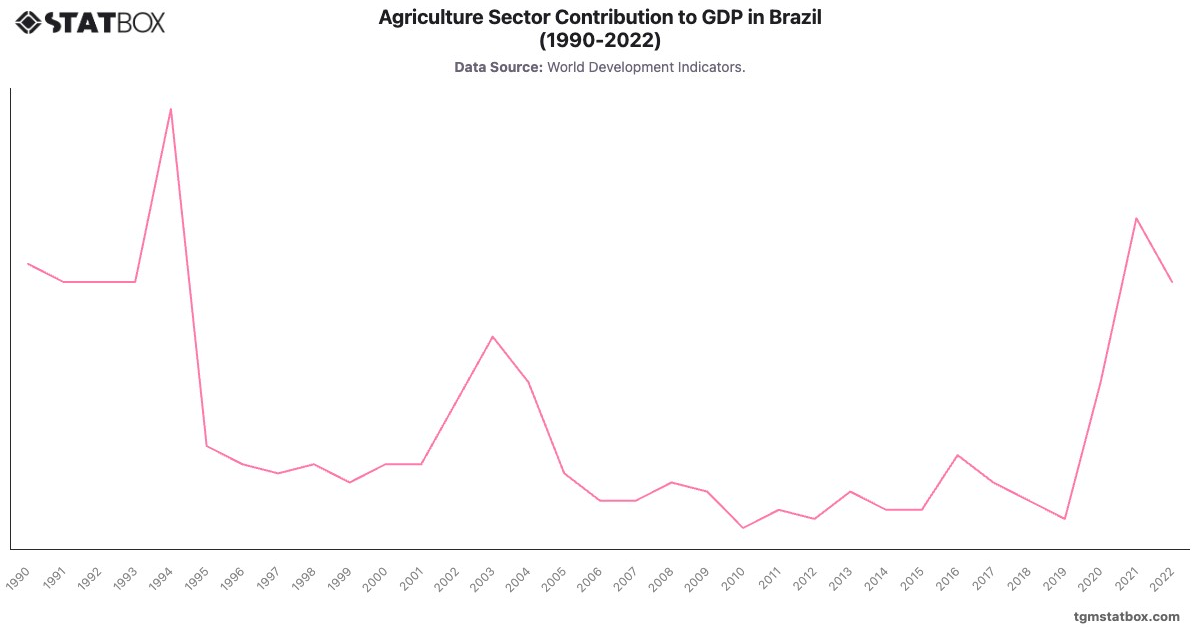
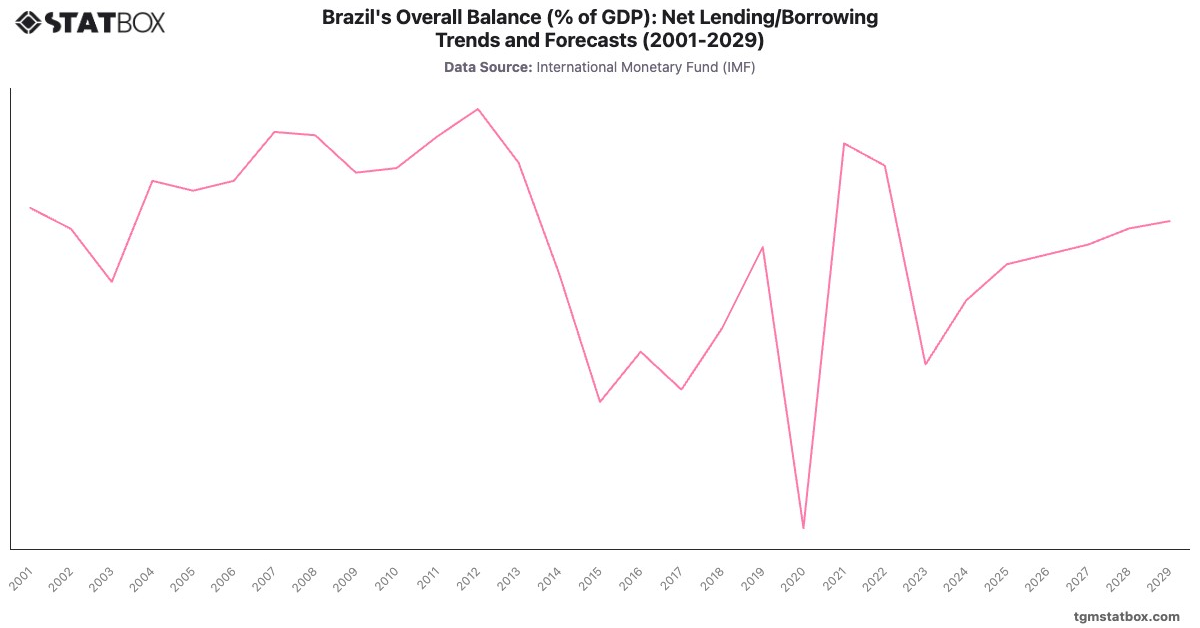
For a broader context, visit other statistics on Brazil’s agriculture share in GDP, Brazil’s GDP balance estimate, Brazil’s urbanization rate.