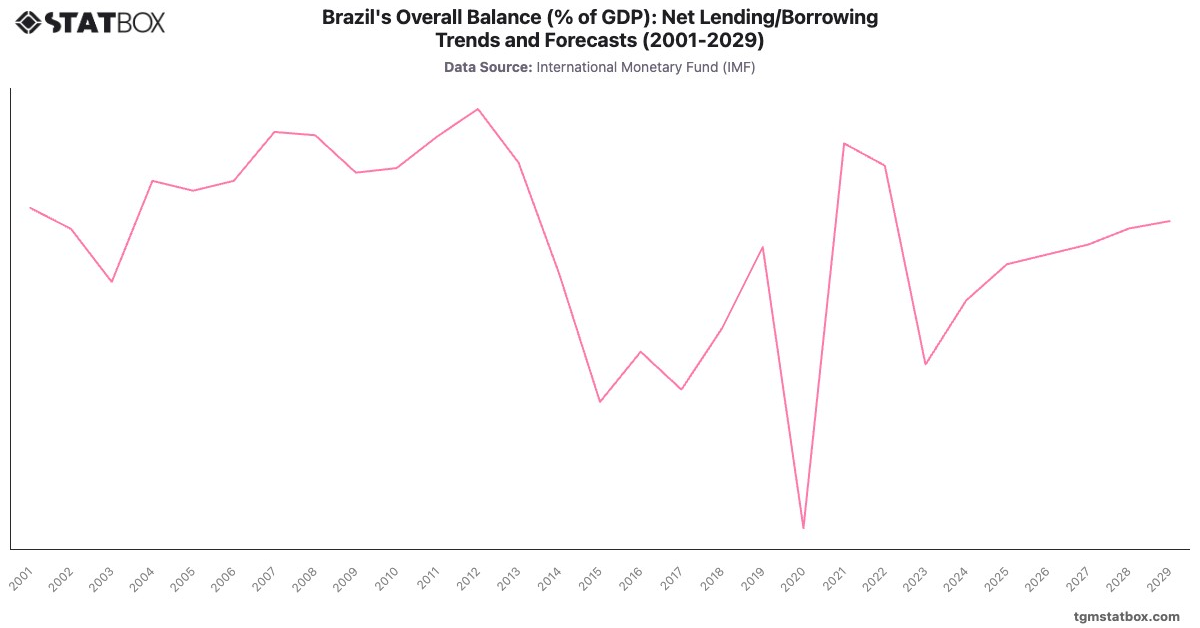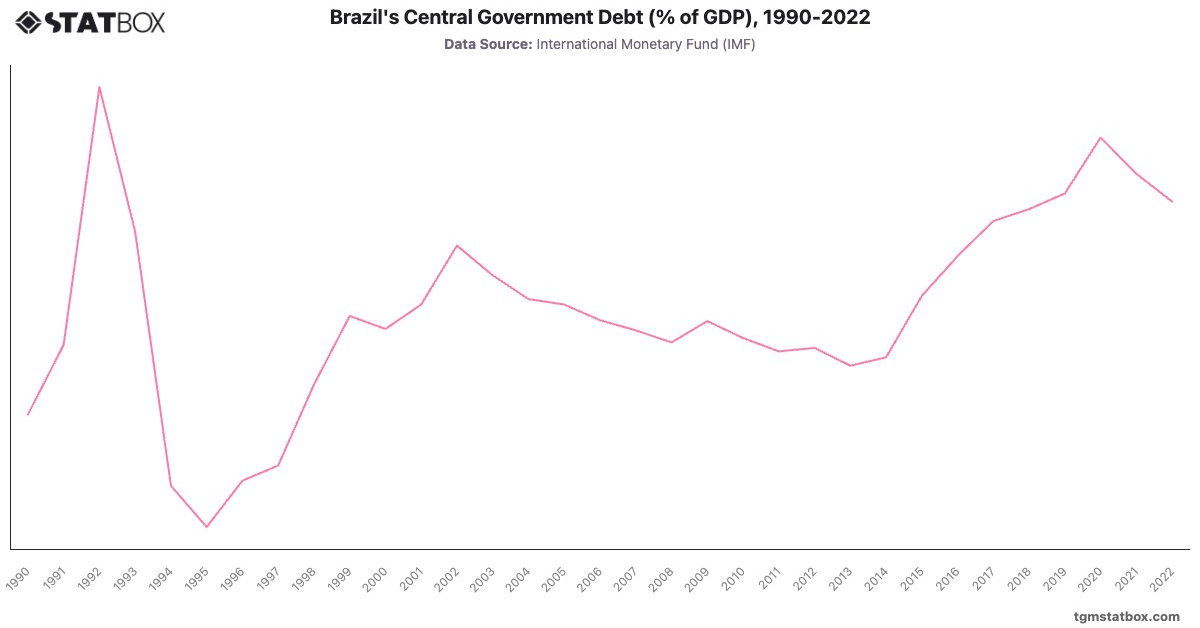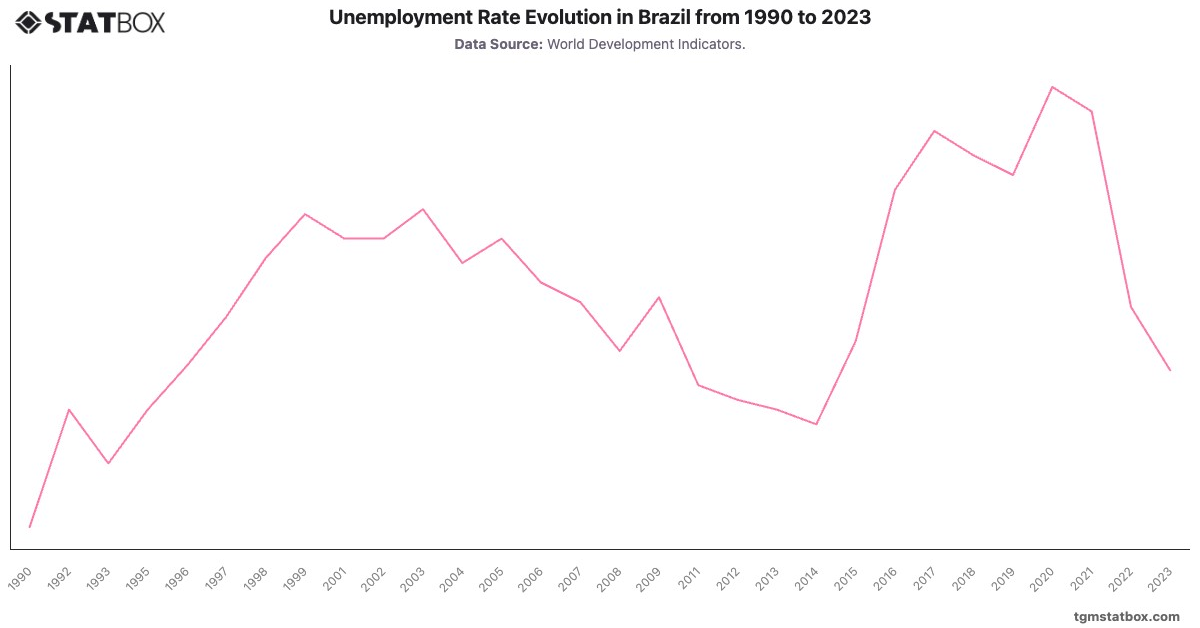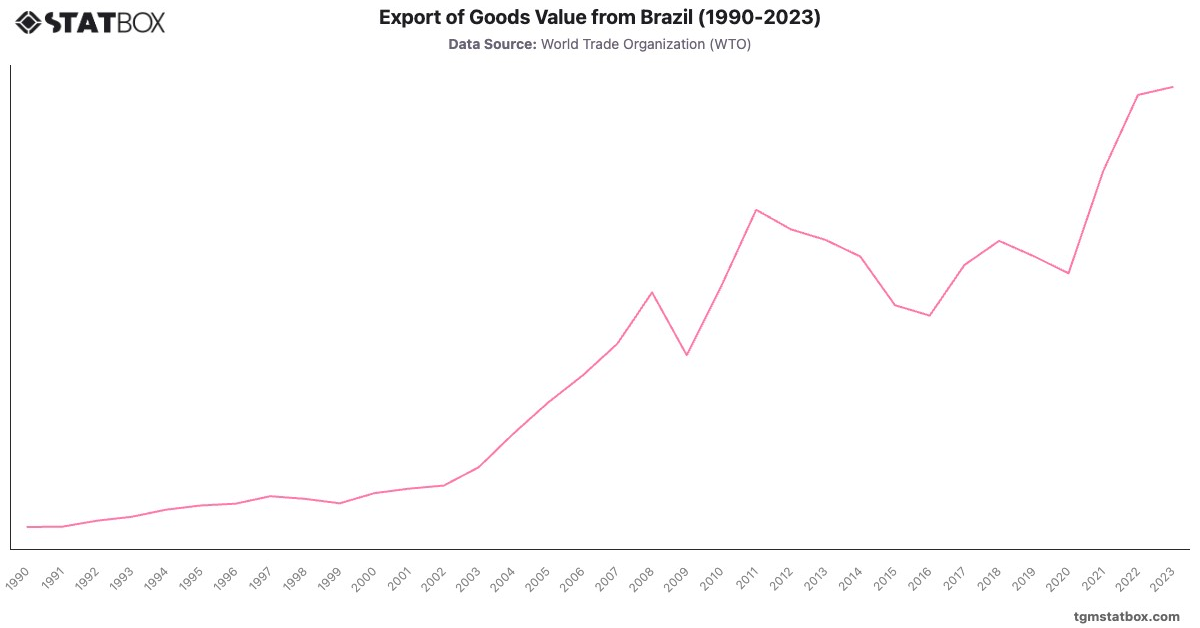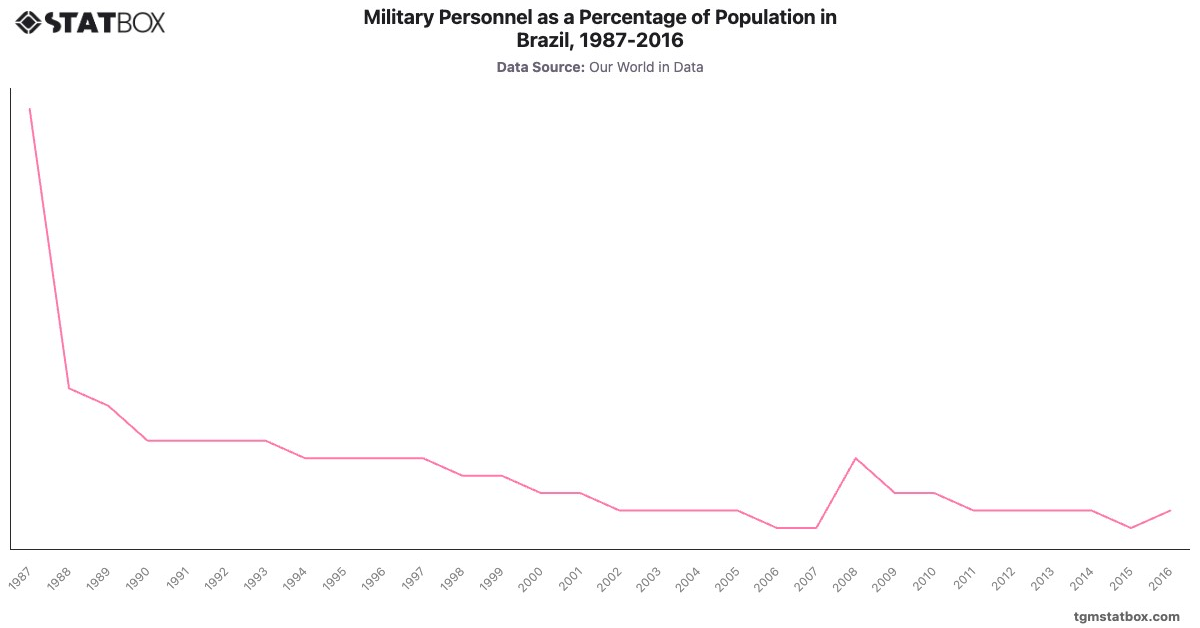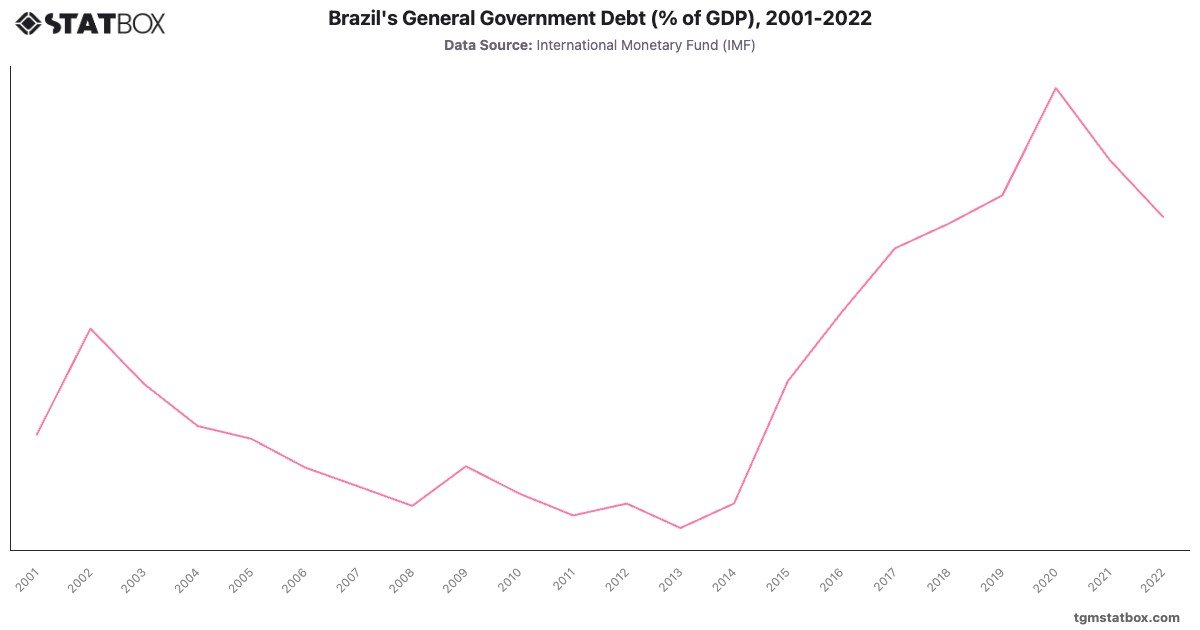
Brazil’s general government debt-to-GDP ratio was marked by fluctuations over the decades. After peaking at in 2002, Brazil managed to reduce its debt to in 2011 through economic reforms and revenue growth. However, from 2014 onward, debt increased rapidly due to economic downturns, reaching by 2019, as government spending rose to address economic and social challenges.
The COVID-19 pandemic exacerbated Brazil’s debt levels, pushing it to a high of in 2020. By 2022, debt had decreased slightly to as Brazil’s economy began recovering, but debt remained elevated due to long-standing fiscal pressures and pandemic recovery spending.
The COVID-19 pandemic exacerbated Brazil’s debt levels, pushing it to a high of in 2020. By 2022, debt had decreased slightly to as Brazil’s economy began recovering, but debt remained elevated due to long-standing fiscal pressures and pandemic recovery spending.
For a deeper dive into the topic, explore Brazil’s annual GDP growth rate, Brazil’s agriculture share in GDP, Brazil’s central government debt as a percentage of GDP.