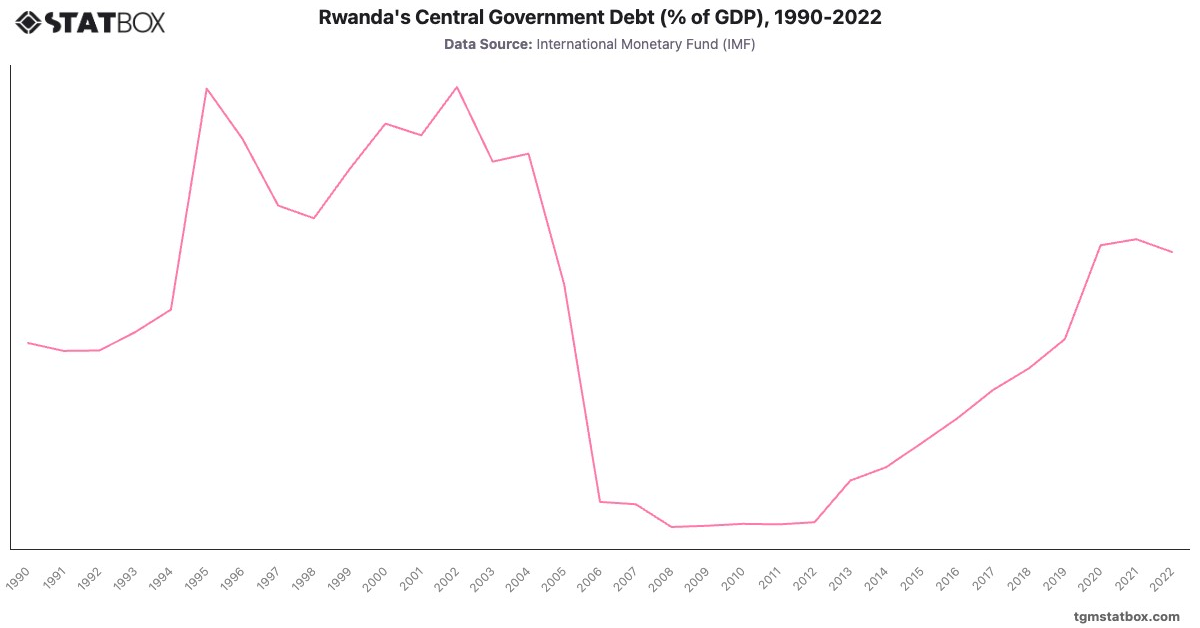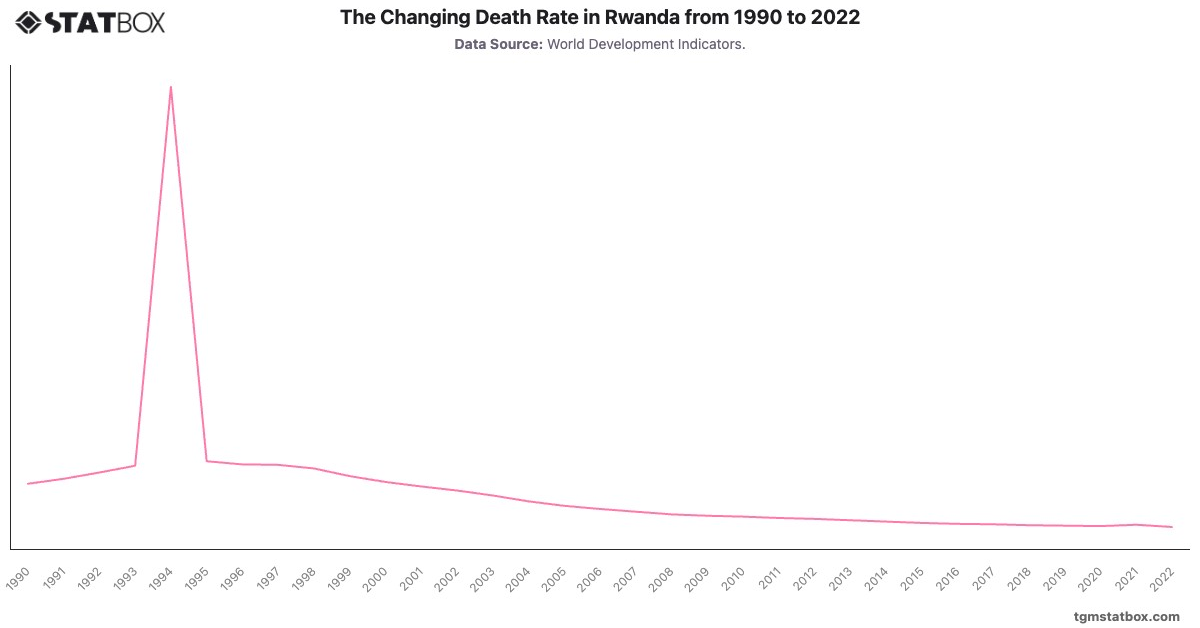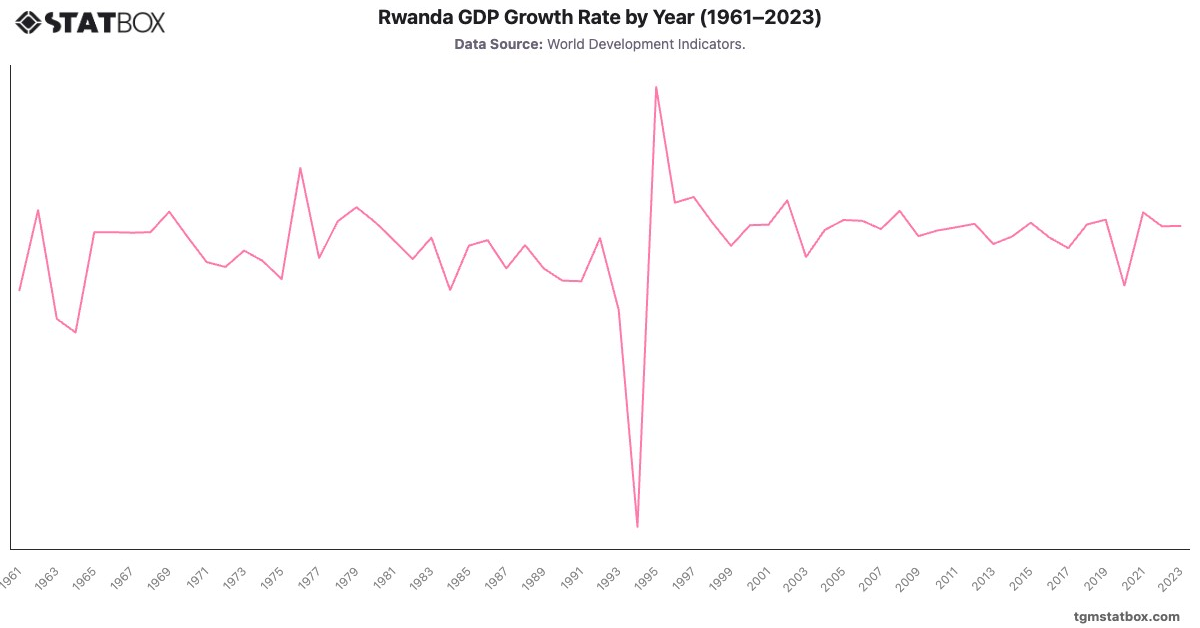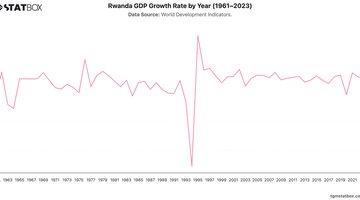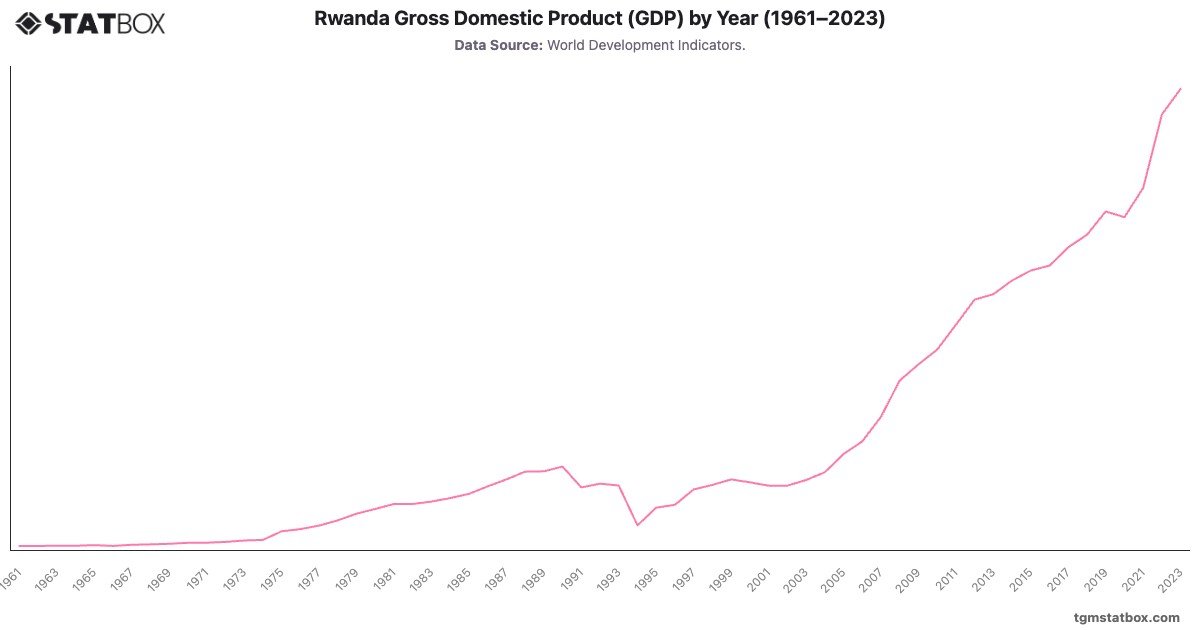
From 1961 to 1990, the country experienced steady but modest growth, rising from $122 million to $2.55 billion, driven primarily by agriculture and coffee exports. However, this relatively stable period came to an abrupt halt with the onset of civil unrest in the early 1990s. The most dramatic decline occurred in 1994, when GDP plummeted to $753 million during the Rwandan Genocide, marking the lowest point in the country's modern economic history.
The post-genocide period demonstrates Rwanda's remarkable recovery and transformation. Under President Paul Kagame's leadership since 2000, the country implemented ambitious economic reforms and development programs, leading to consistent GDP growth. Notable achievements include the Vision 2020 program launched in 2000, which helped propel GDP from $2.06 billion to $13.31 billion by 2022. The period from 2005 to 2023 saw particularly impressive growth, with GDP increasing more than fourfold from $2.93 billion to $14.09 billion. Even during the global COVID-19 pandemic, Rwanda showed resilience with only a minor contraction in 2020 before bouncing back strongly. The country's focus on digital infrastructure, tourism, and service sector development, combined with significant foreign investment and aid, has contributed to its position as one of Africa's fastest-growing economies.
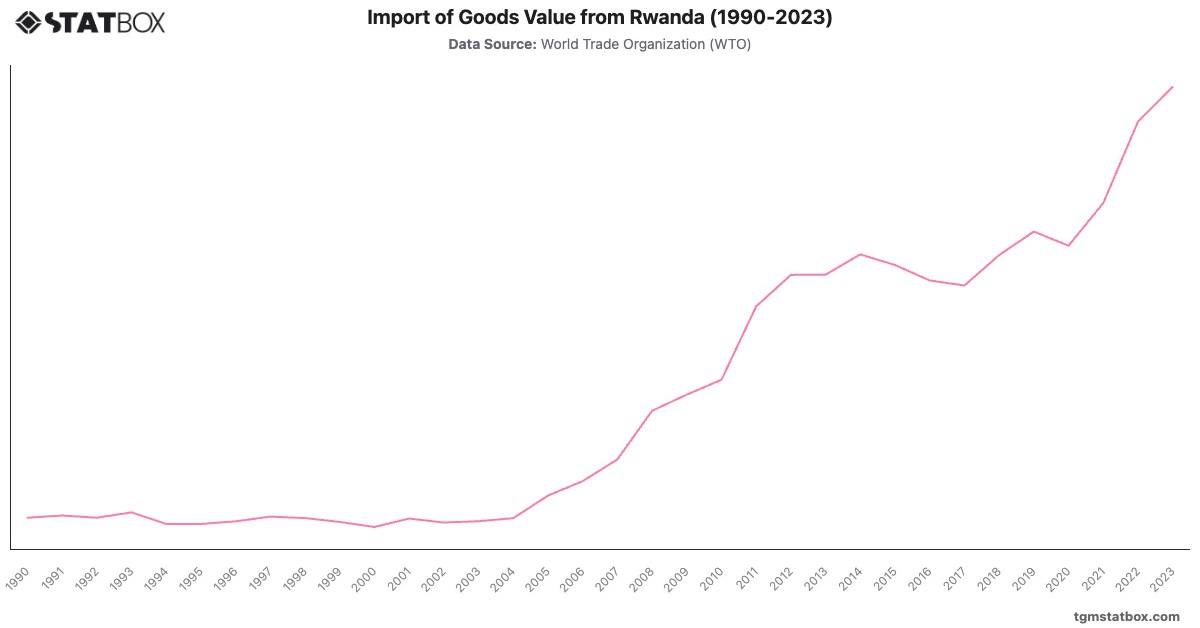
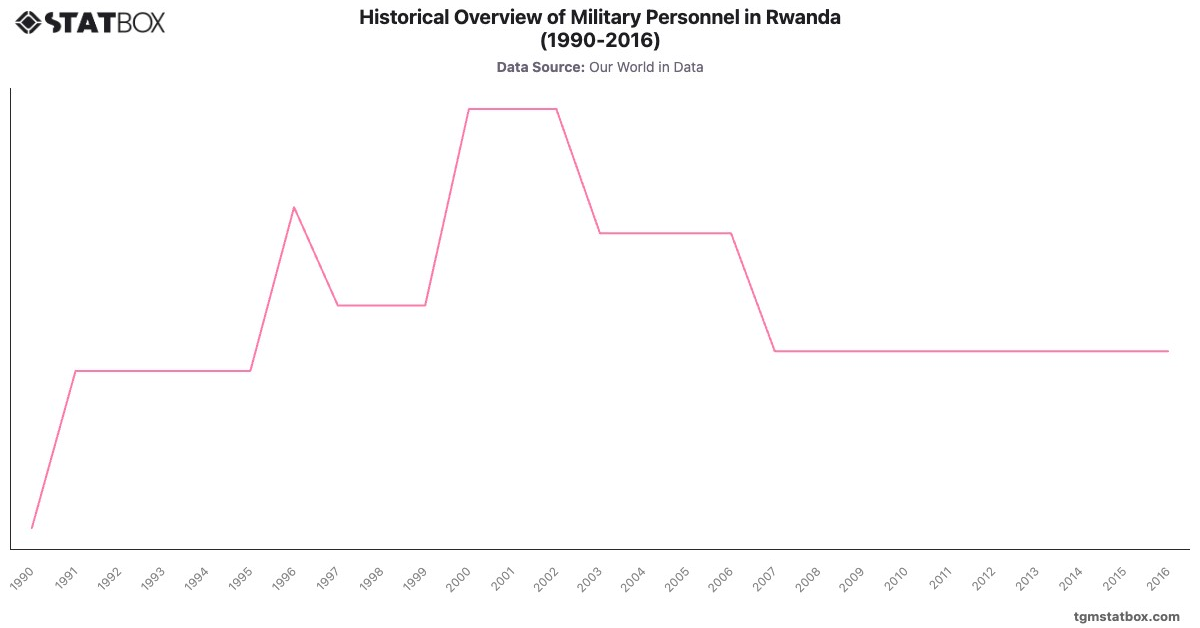
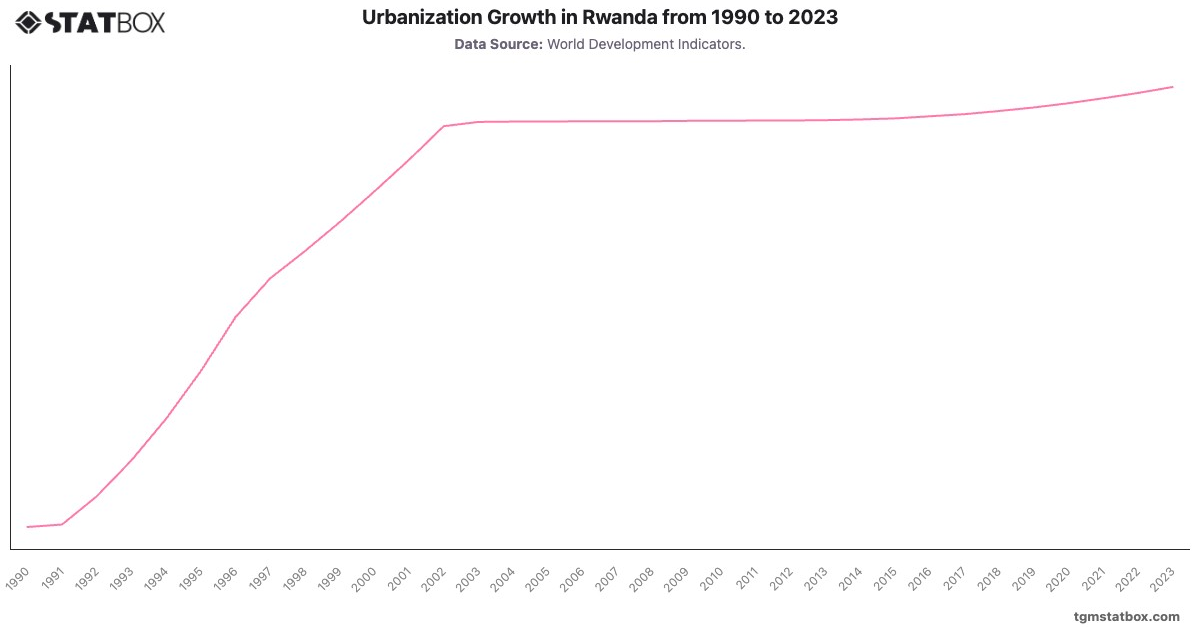
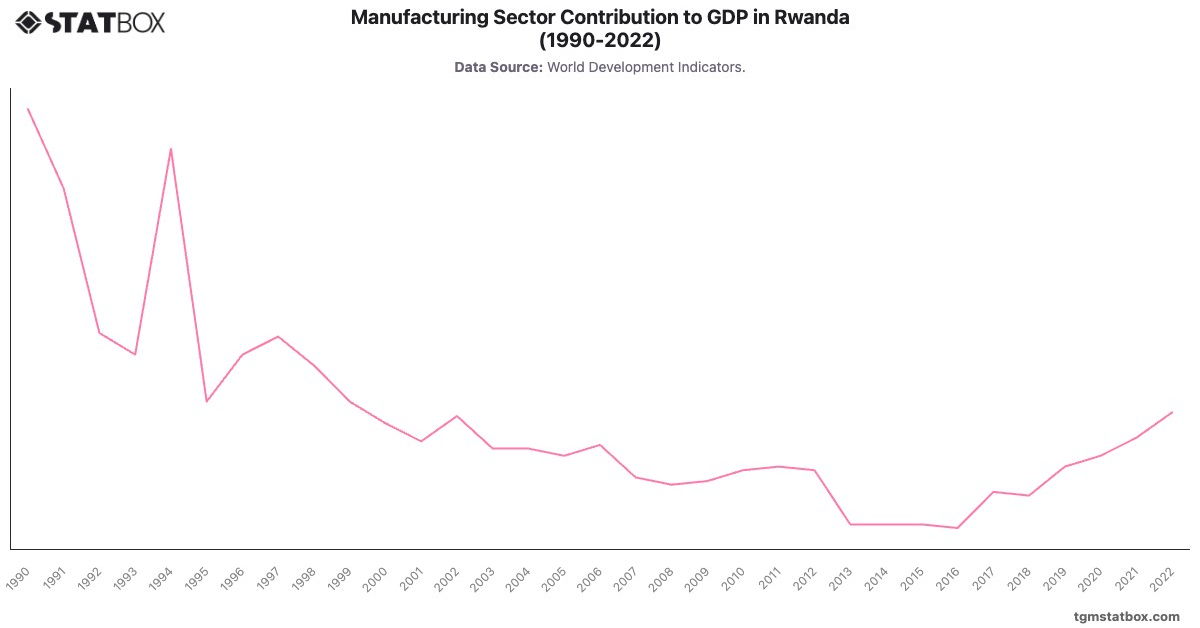
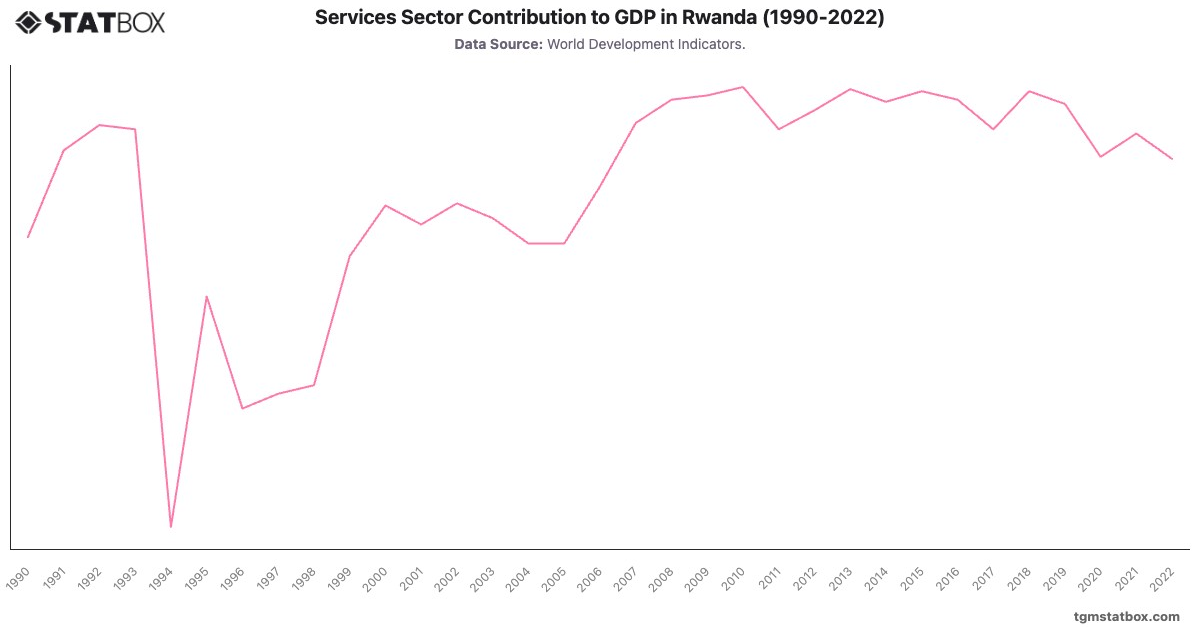
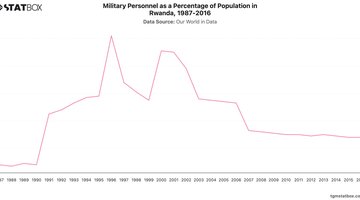
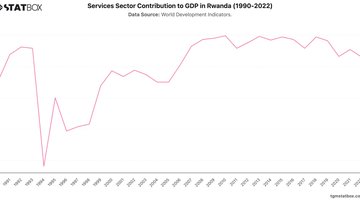
Explore related charts to gain a better understanding of Rwanda’s goods import value, share of personnel out of population in Rwanda, Rwanda’s services sector GDP share.