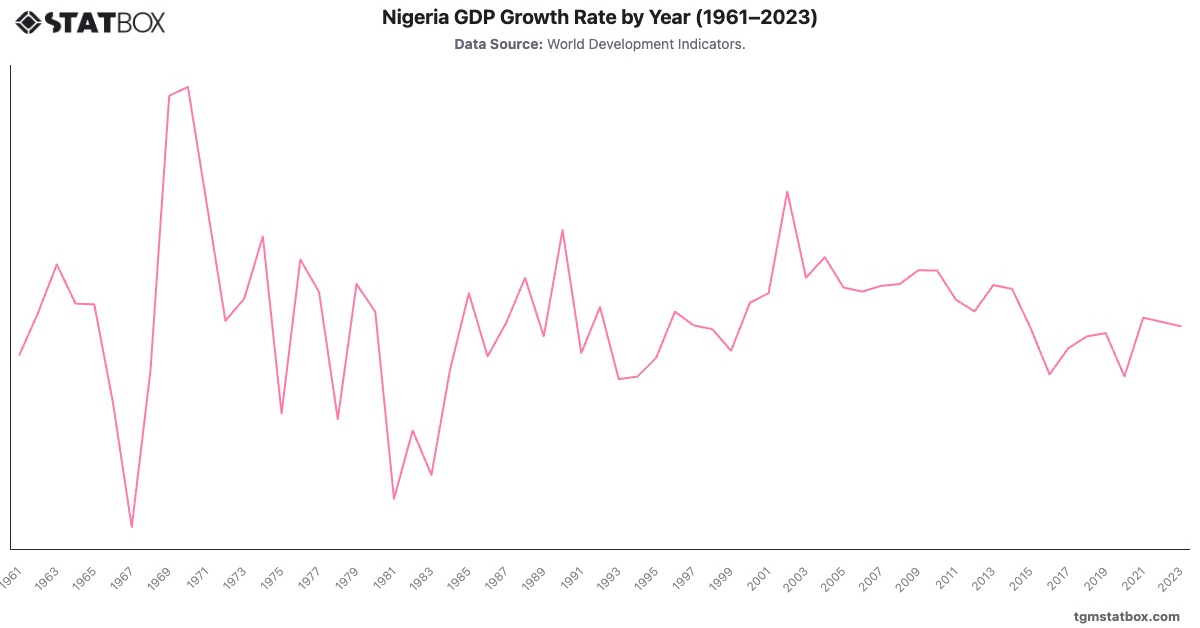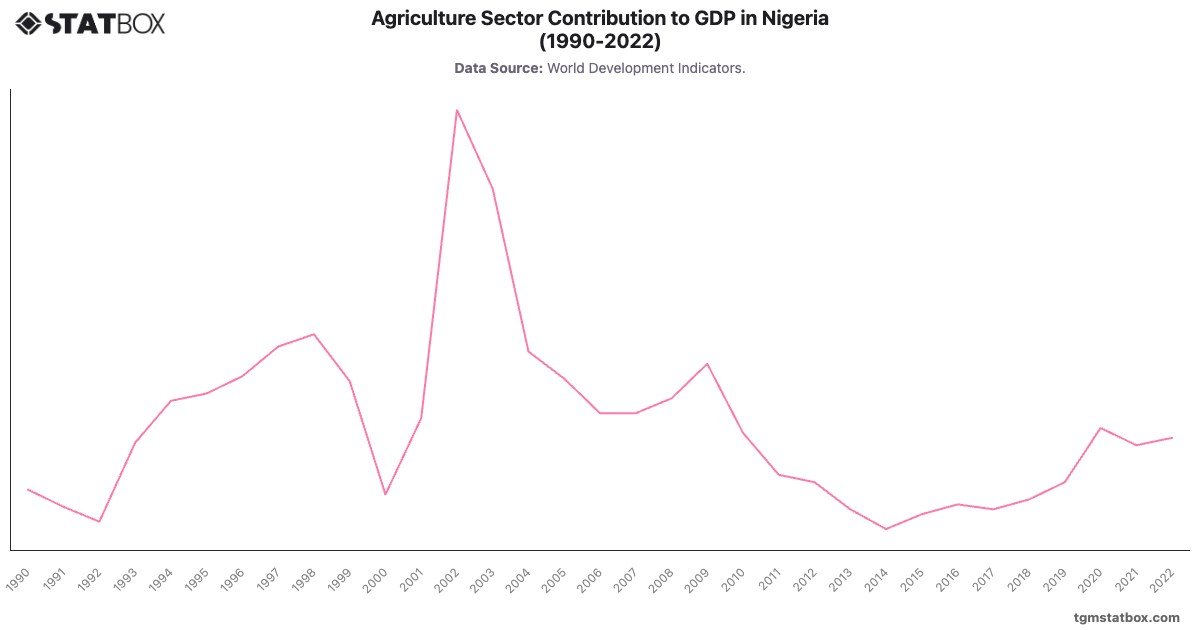
Nigeria’s agriculture sector contribution fluctuated from in 1990, peaking at in 2002, reflecting its role as a buffer during economic instability, particularly as oil prices fluctuated. The high point in 2002 may reflect a response to volatile oil revenue, which spurred renewed focus on agriculture for food security. In subsequent years, agriculture’s share declined as oil revenue stabilized, yet it remained above , underscoring agriculture’s critical role in employment and subsistence.
The recent increase to in 2020 likely reflects heightened food demand amid the COVID-19 pandemic and government initiatives to reduce food imports, solidifying agriculture’s role in ensuring food security in Nigeria’s economy.
The recent increase to in 2020 likely reflects heightened food demand amid the COVID-19 pandemic and government initiatives to reduce food imports, solidifying agriculture’s role in ensuring food security in Nigeria’s economy.
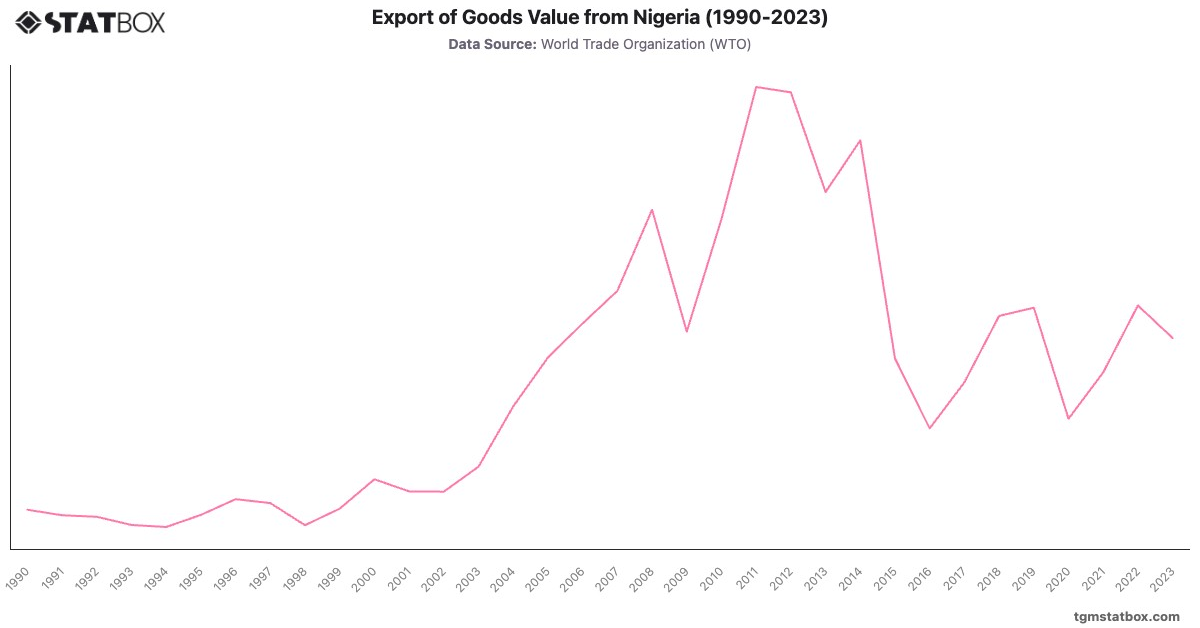
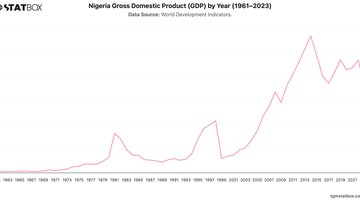
For a deeper dive into the topic, explore Nigeria’s annual GDP, Nigeria’s net lending/borrowing (% of GDP), Nigeria's goods export value.