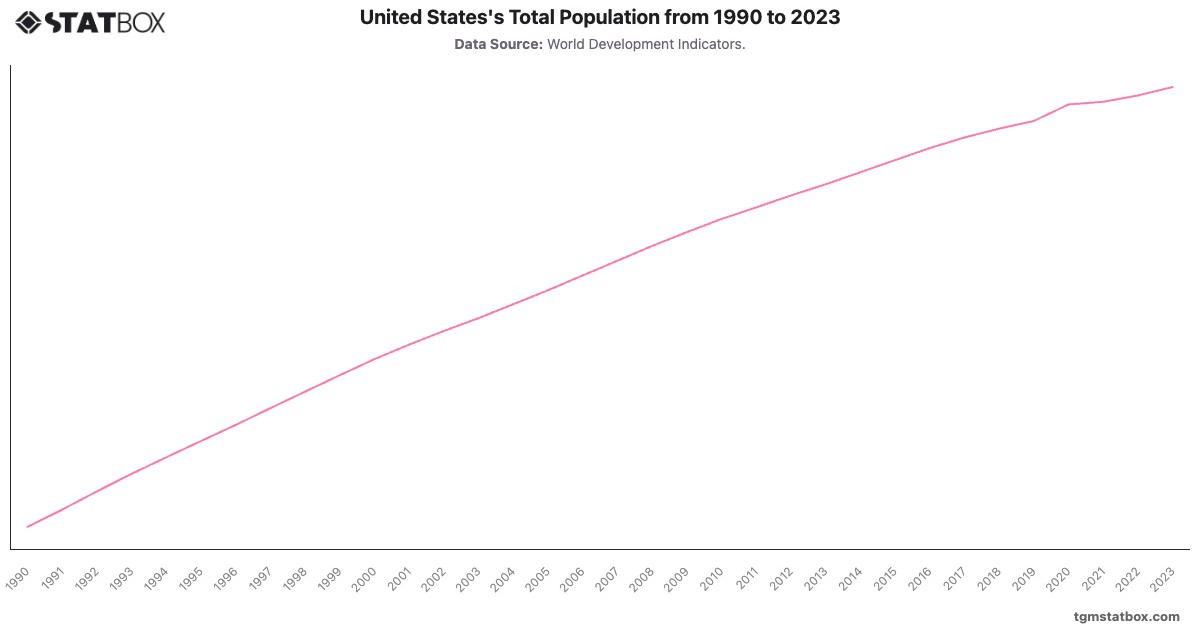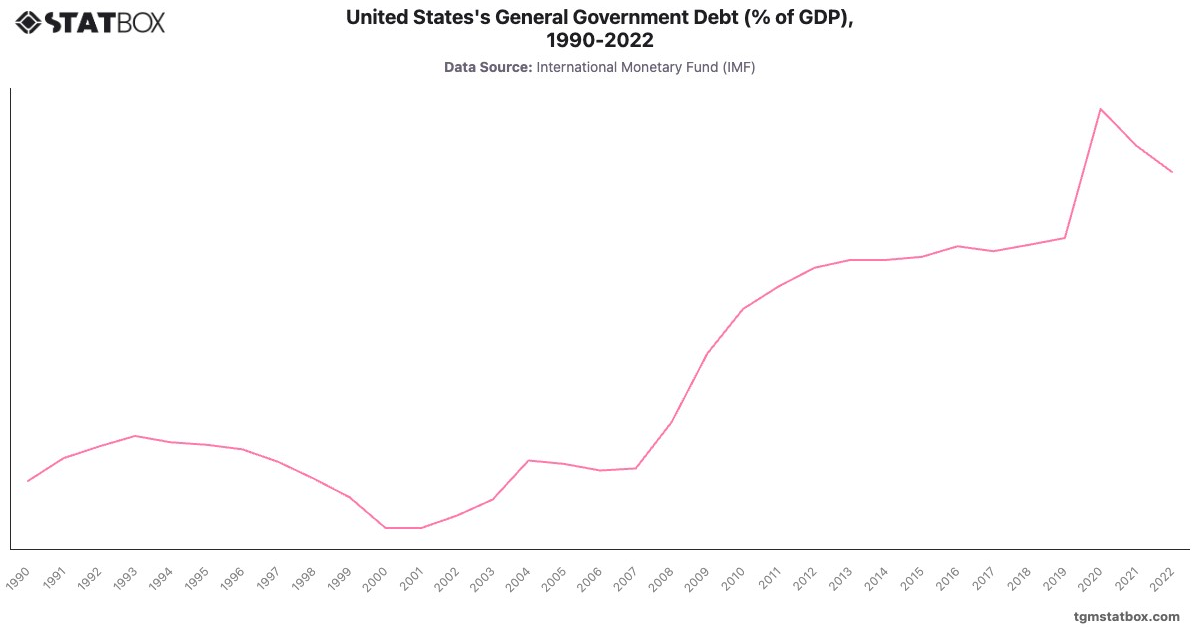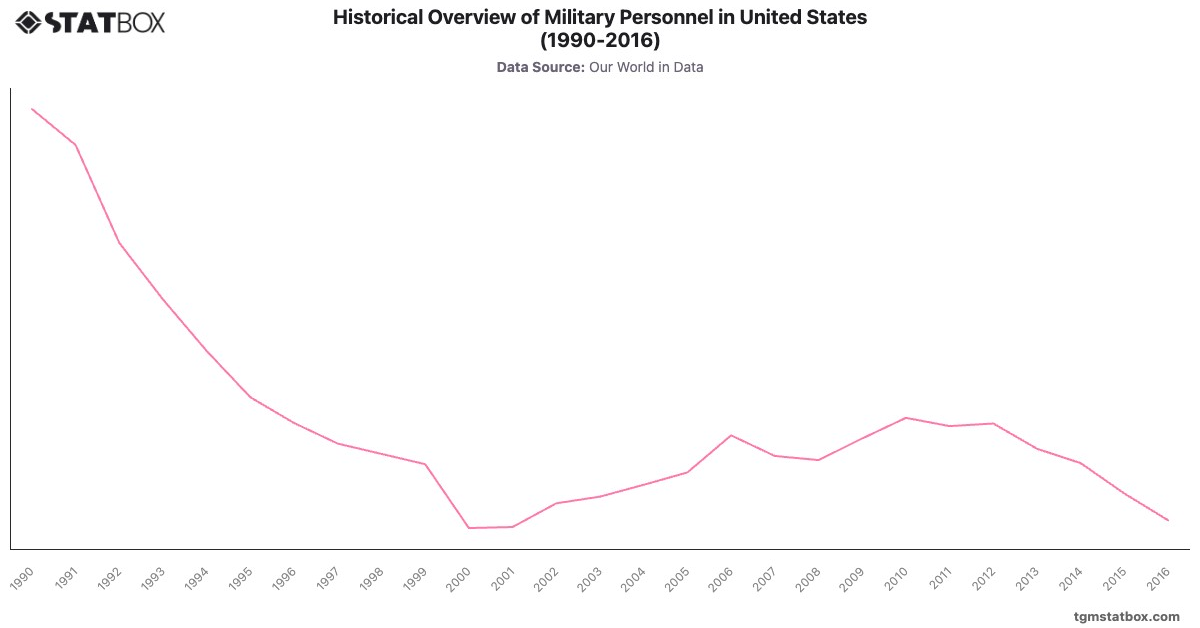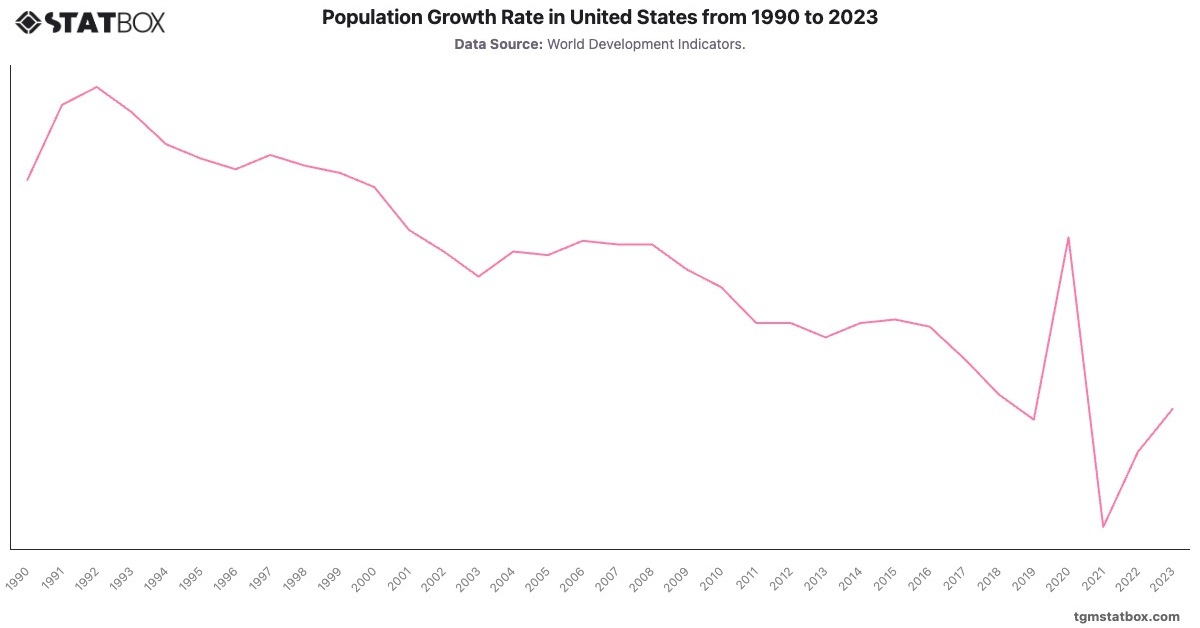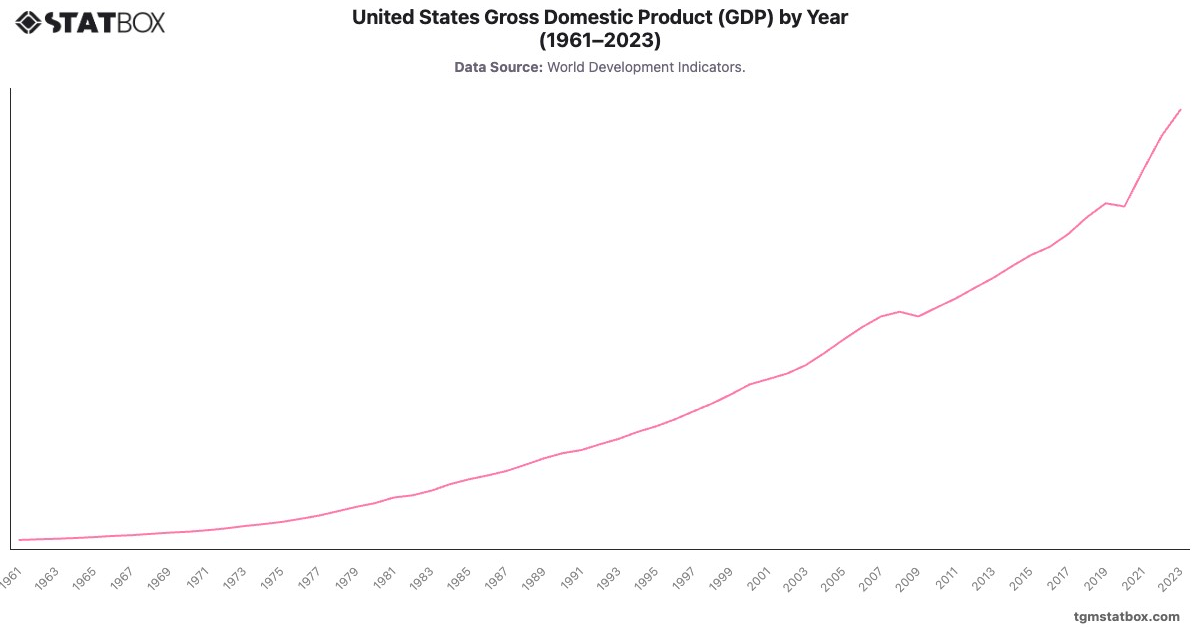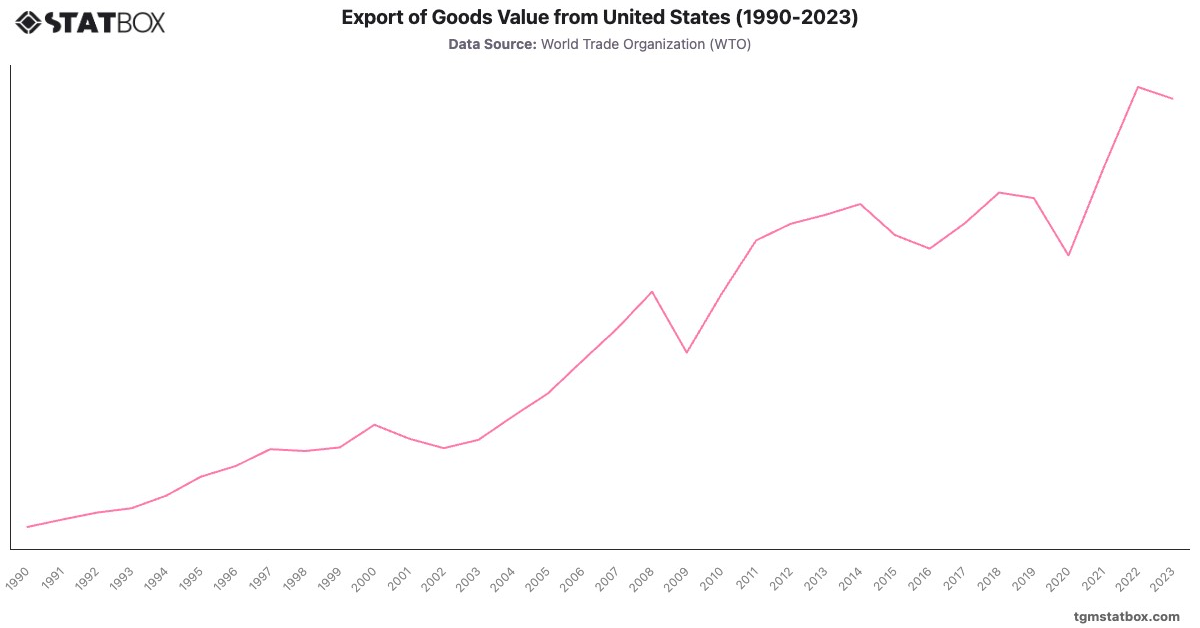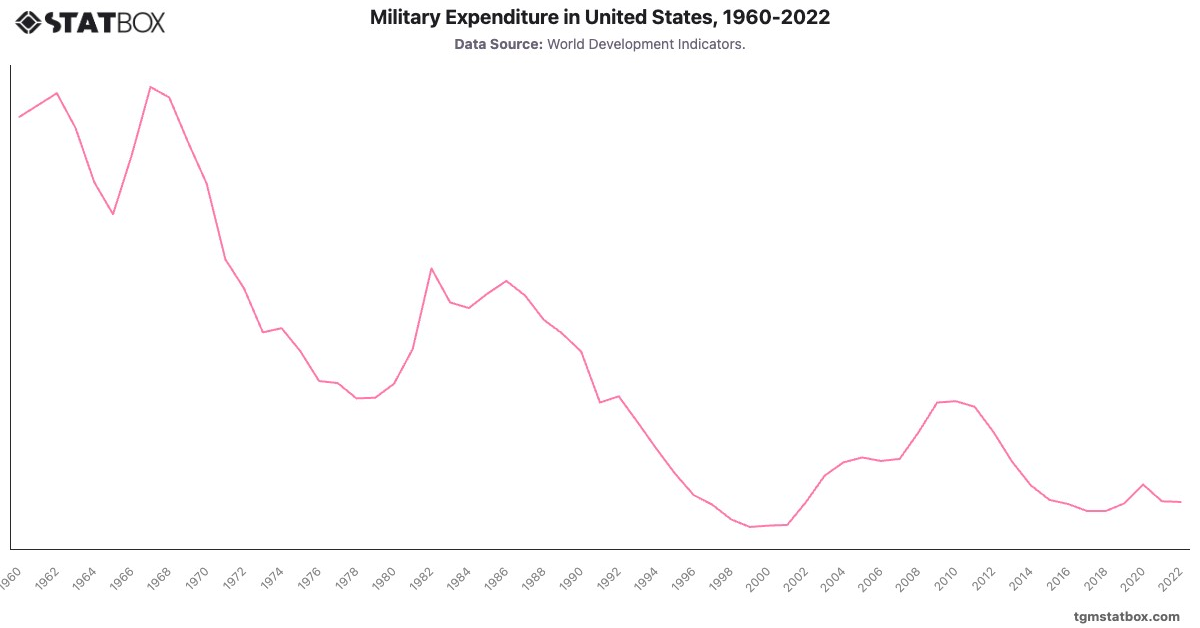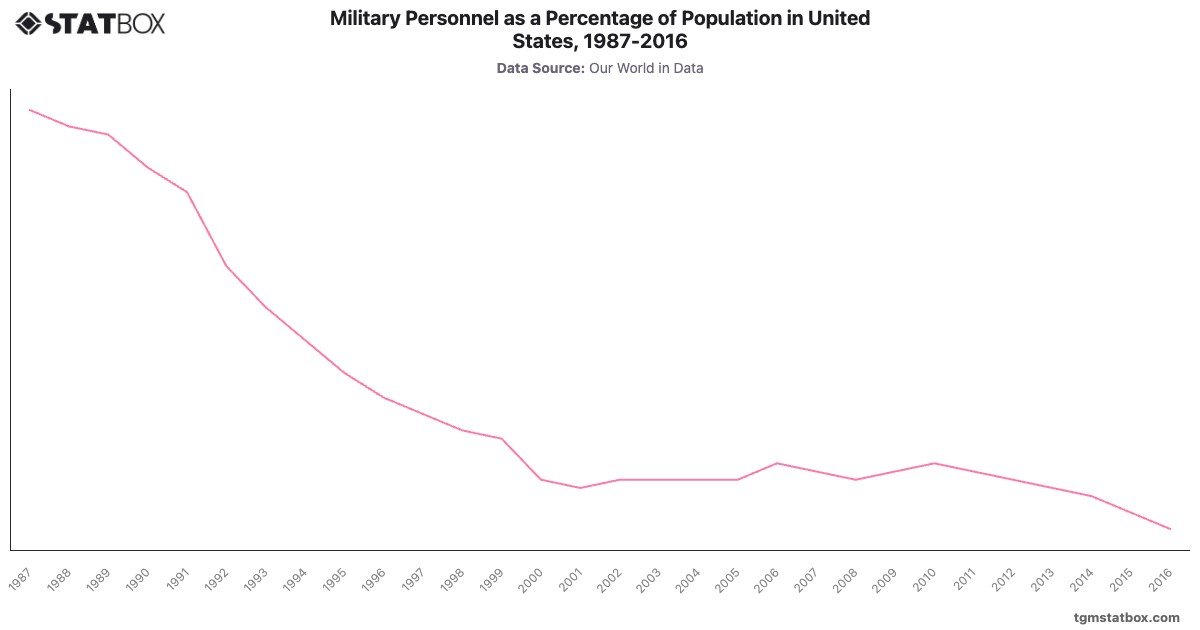
In the United States, military personnel as a percentage of the population showed a steady decline from in 1987 to by 2016. The end of the Cold War marked the start of a consistent reduction, as the focus shifted to a peacetime military posture, supported by significant technological advancements. The high urban population growth during this period also influenced the relative size of the military, as defense spending was increasingly directed toward modernizing equipment rather than increasing personnel.
Throughout the early 2000s, even with involvement in global conflicts, the percentage of military personnel remained stable at , suggesting a strategic shift toward reliance on technology, reserves, and contracted forces. By 2016, the reduction to reflects a continued commitment to efficiency and specialization, maintaining readiness while reducing the military's overall share of the population.
Throughout the early 2000s, even with involvement in global conflicts, the percentage of military personnel remained stable at , suggesting a strategic shift toward reliance on technology, reserves, and contracted forces. By 2016, the reduction to reflects a continued commitment to efficiency and specialization, maintaining readiness while reducing the military's overall share of the population.
For additional information, visit statistics on US population growth rate, US working-age population share, United States’ population figures.