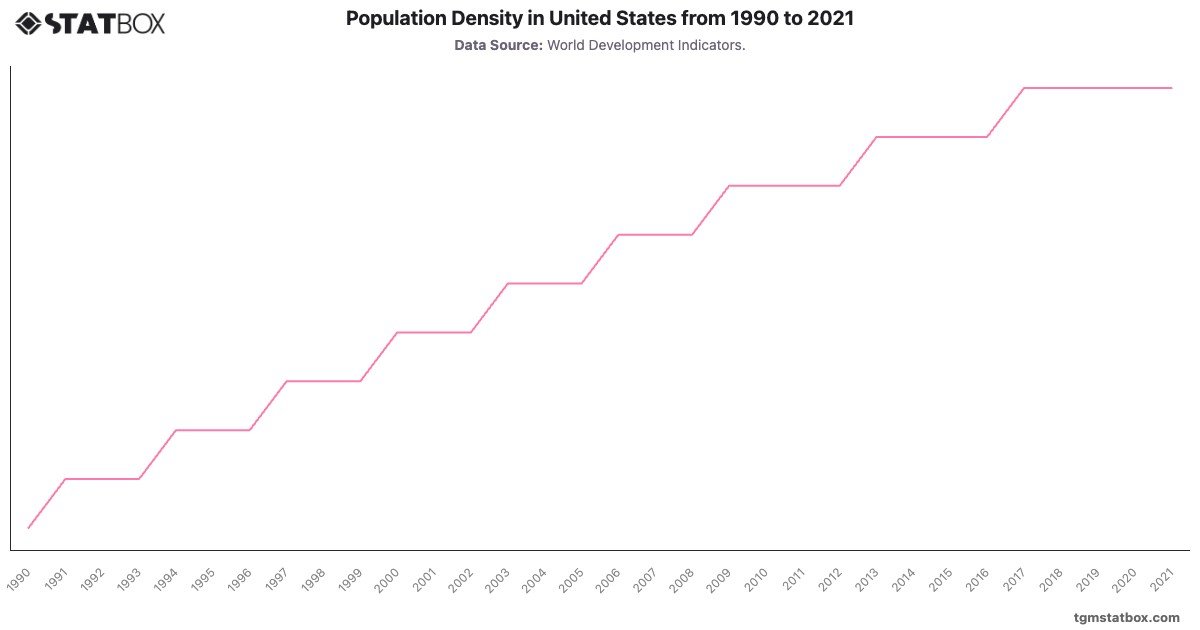
The United States experienced a gradual increase in population density from 27 people per square kilometer in 1990 to 36 in 2021. This rise is largely concentrated in urban and suburban regions like New York, California, and Texas, driven by economic opportunities, immigration, and a high standard of living. However, vast rural areas, particularly in states like Montana and Wyoming, maintain very low densities, balancing the national average.
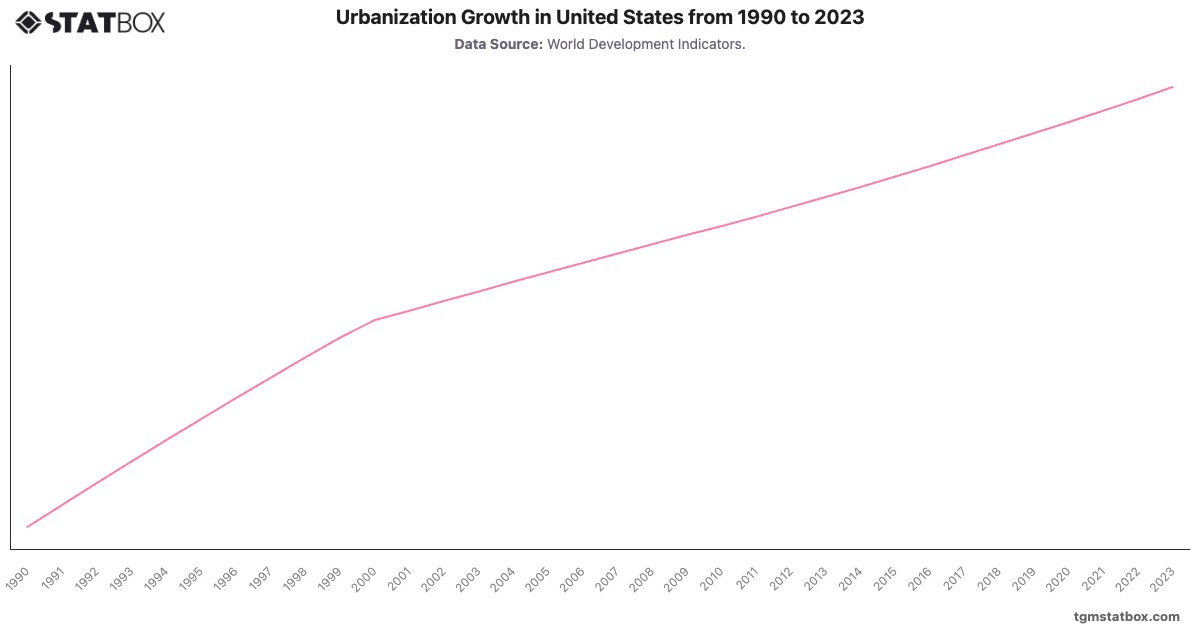
Urban sprawl and suburbanization continue to shape U.S. population trends, with metropolitan areas growing denser while rural regions remain sparsely populated. As the population grows, urban density will likely increase, with immigration and economic growth in key states influencing future density patterns.
Urban sprawl and suburbanization continue to shape U.S. population trends, with metropolitan areas growing denser while rural regions remain sparsely populated. As the population grows, urban density will likely increase, with immigration and economic growth in key states influencing future density patterns.
Discover additional trends and data on US population growth rate, Urbanization trend in the United States, United States annual GDP growth rate.