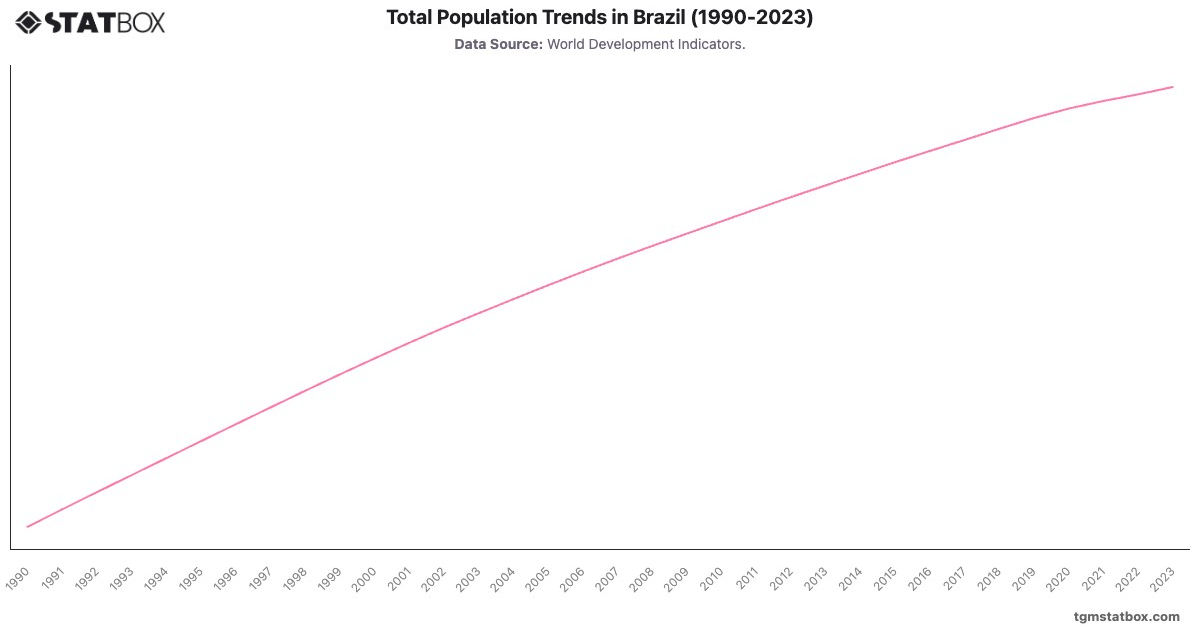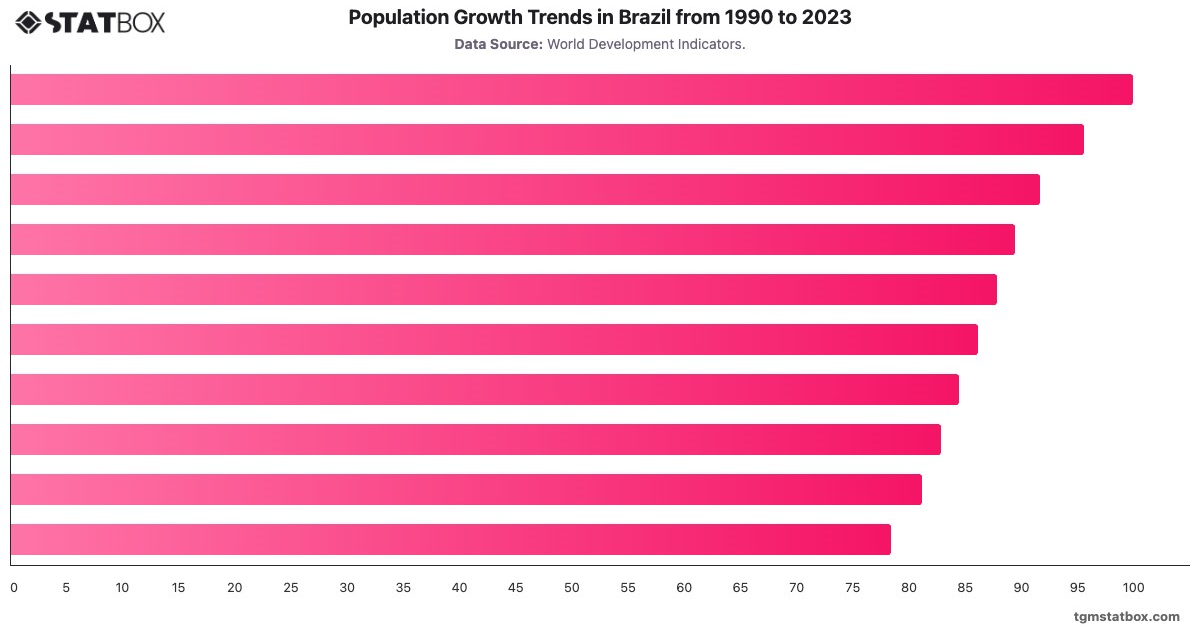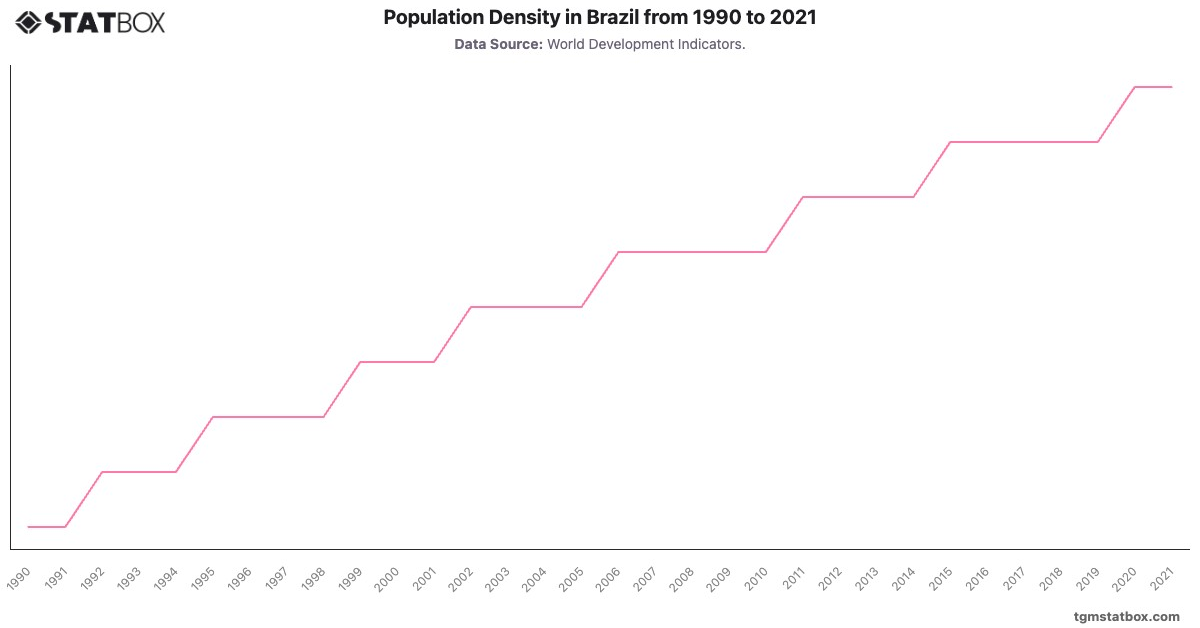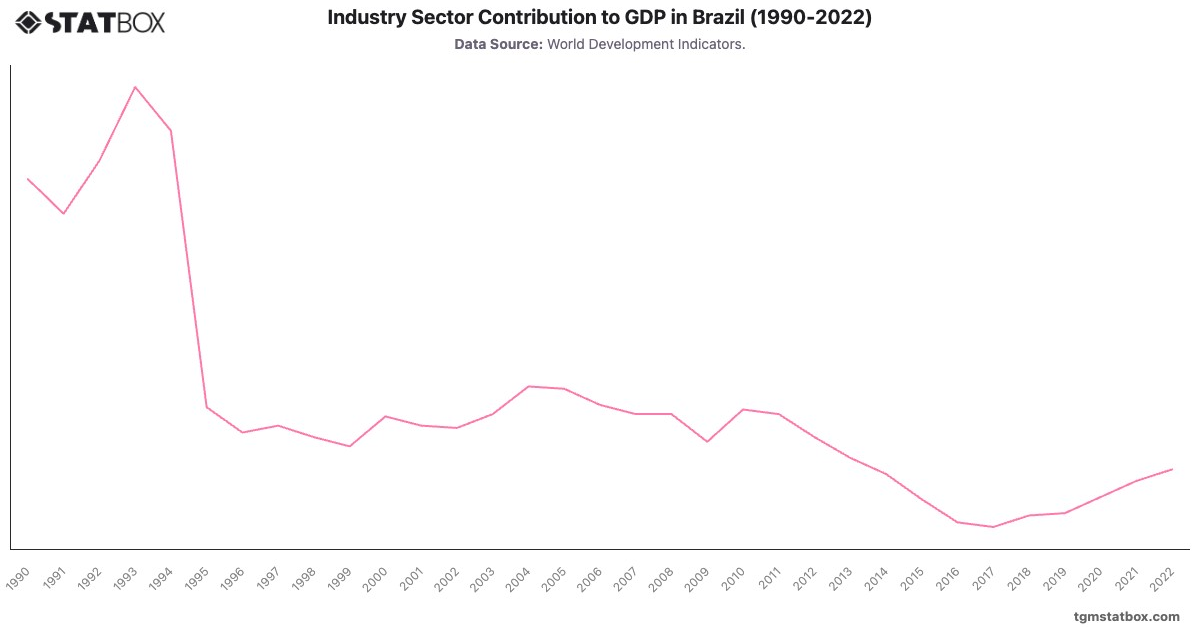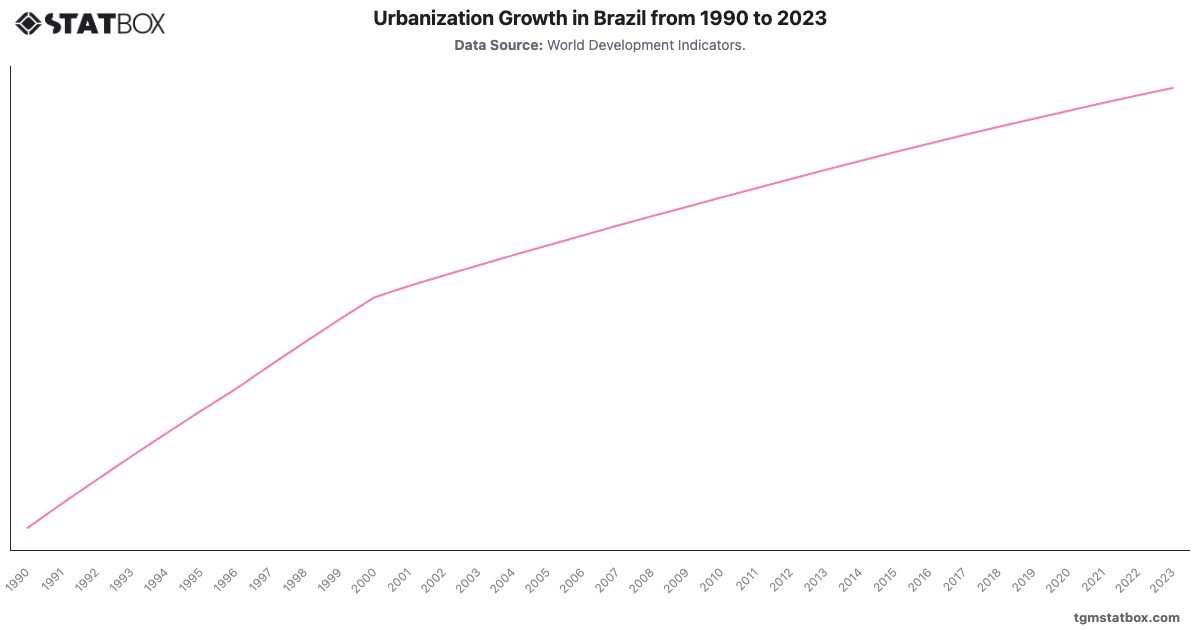
Brazil’s urbanization has shown substantial growth, beginning at in 1990 and rising to by 2000. The rapid increase in the 1990s is attributed to industrial growth and rural-to-urban migration, as economic opportunities were concentrated in urban centers like São Paulo and Rio de Janeiro. The urbanization rate continued to climb in the 2000s, reaching by 2010, as cities expanded to accommodate a growing population. This trend persisted, with Brazil’s urbanization reaching in 2023. This growth highlights Brazil’s ongoing urban concentration, driven by industrialization, better services in cities, and an increasing focus on urban development initiatives.
For a deeper dive into the topic, explore Brazil’s population trends, Brazil’s population density, Brazil’s population trend.