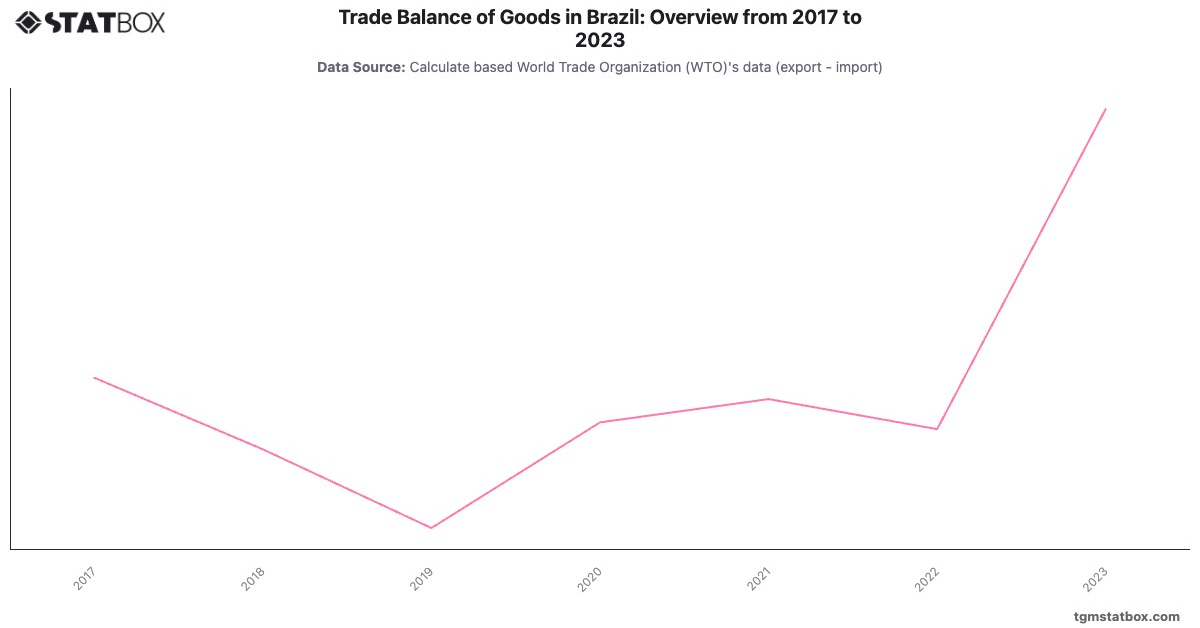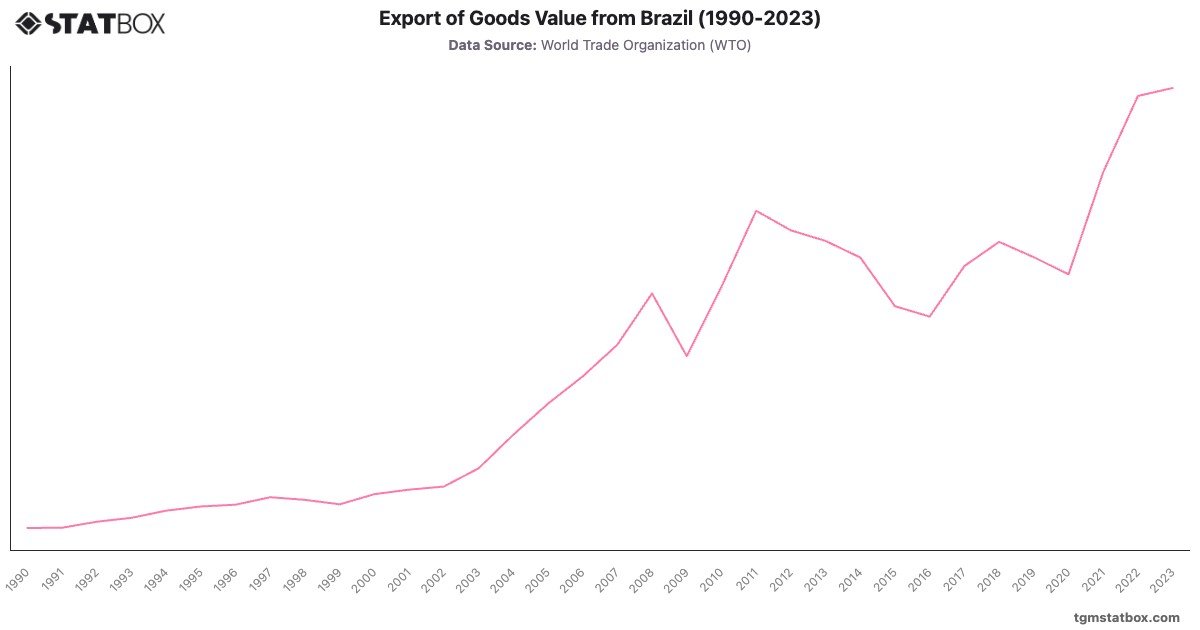
Brazil’s exports grew substantially over the decades, starting at $31.4 billion in 1990 and peaking at $339.7 billion in 2023. The rise was driven by its natural resources, particularly agricultural products, iron ore, and oil. By 2008, exports reached $195.8 billion due to high global commodity prices and robust demand from China. The 2009 global financial crisis caused a temporary decline to $151.8 billion, but exports rebounded to $253.7 billion by 2011.
Between 2015 and 2020, economic and political instability impacted exports, which fell to $209.2 billion in 2020. A post-pandemic recovery, combined with favorable commodity prices and increased trade partnerships, led to a sharp rise, culminating in $339.7 billion in 2023. This reflects Brazil's continued role as a key supplier of agricultural and mineral commodities globally.
Between 2015 and 2020, economic and political instability impacted exports, which fell to $209.2 billion in 2020. A post-pandemic recovery, combined with favorable commodity prices and increased trade partnerships, led to a sharp rise, culminating in $339.7 billion in 2023. This reflects Brazil's continued role as a key supplier of agricultural and mineral commodities globally.
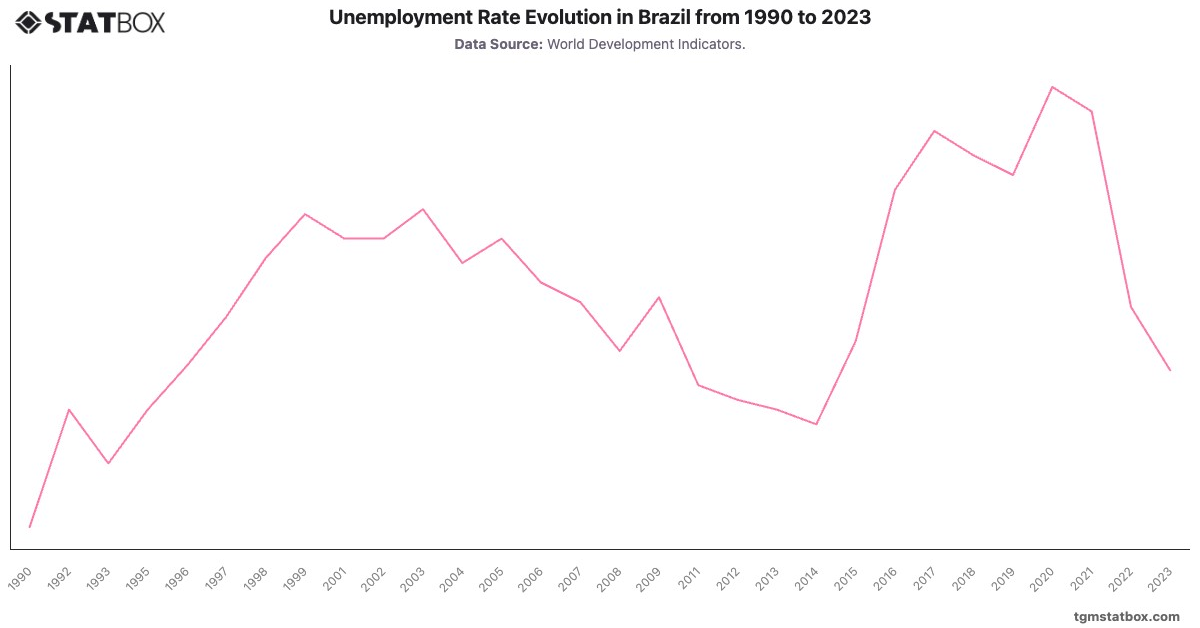
For a broader context, visit other statistics on Brazil’s unemployment rate, Brazil’s population density, Brazil’s GDP balance estimate.