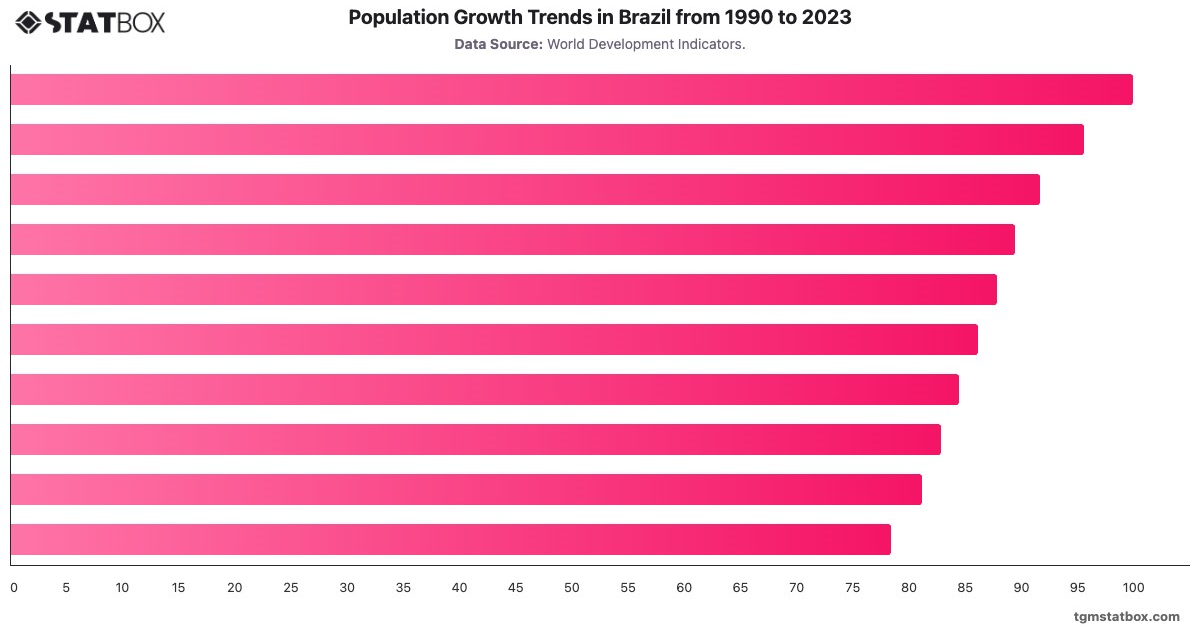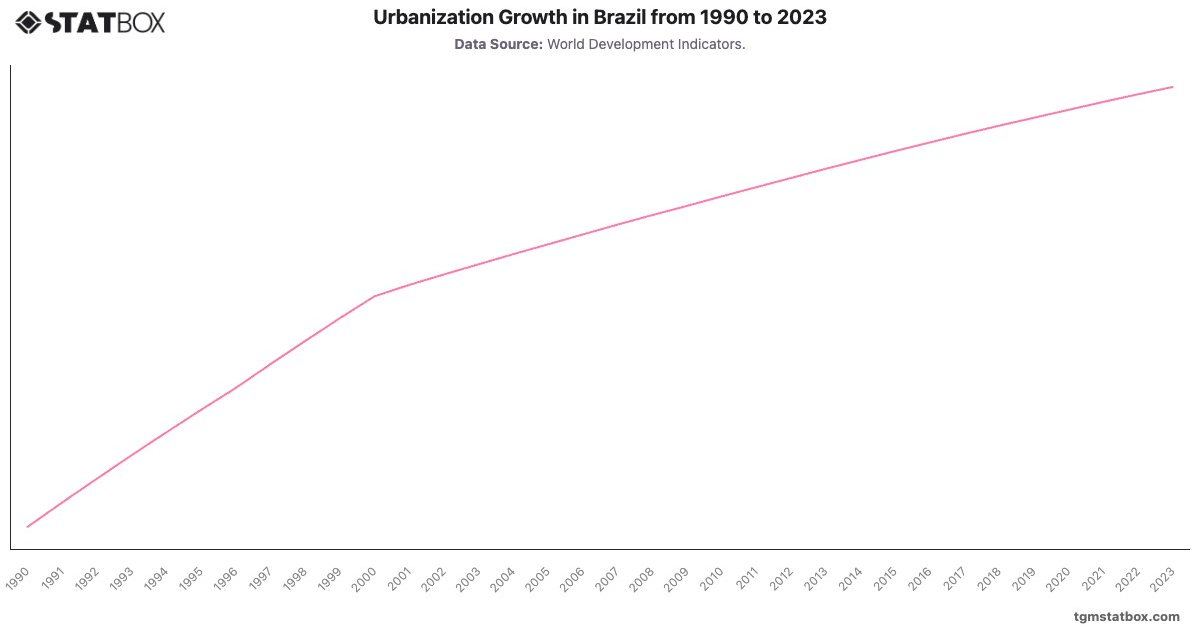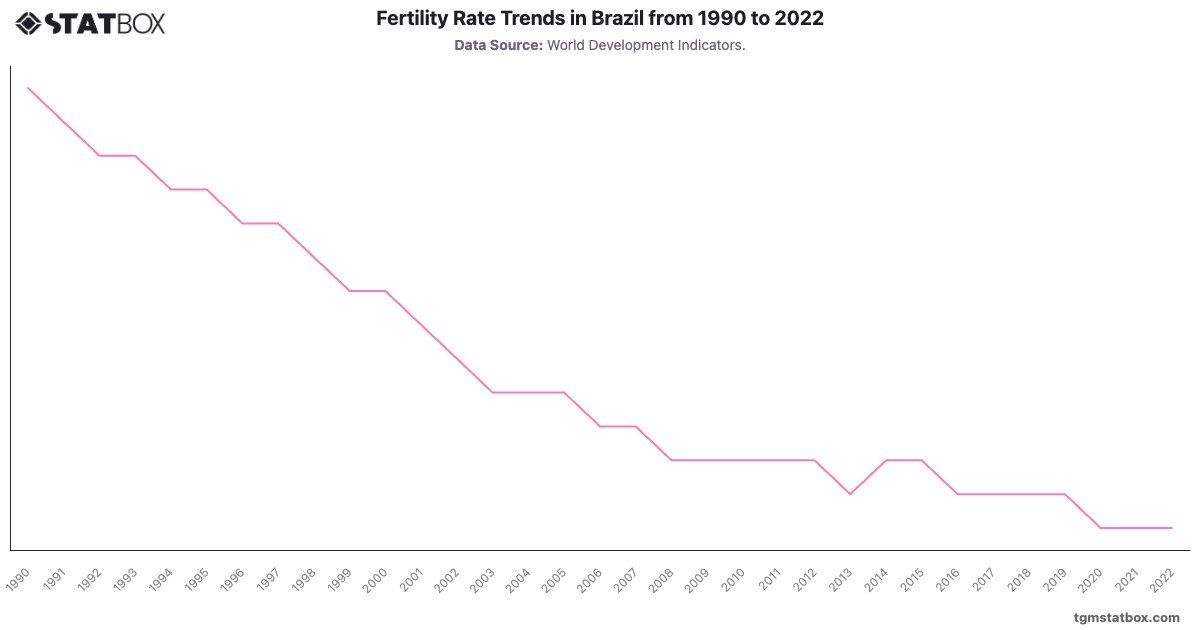
Brazil's fertility rate fell steadily from 2.9 in 1990 to 1.6 in 2022, illustrating a major demographic shift. The sharp decline during the 1990s reflects the effects of urbanization, access to education, and widespread adoption of family planning. By the mid-2000s, the rate stabilized near 1.8 before dipping to its current level, influenced by economic uncertainty and evolving social norms.
Government healthcare initiatives and improved access to reproductive health services were instrumental in this decline. Brazil's shift towards smaller families aligns with global trends in middle-income nations, underscoring the interplay of education, women's empowerment, and economic pressures in shaping fertility behavior.
Government healthcare initiatives and improved access to reproductive health services were instrumental in this decline. Brazil's shift towards smaller families aligns with global trends in middle-income nations, underscoring the interplay of education, women's empowerment, and economic pressures in shaping fertility behavior.
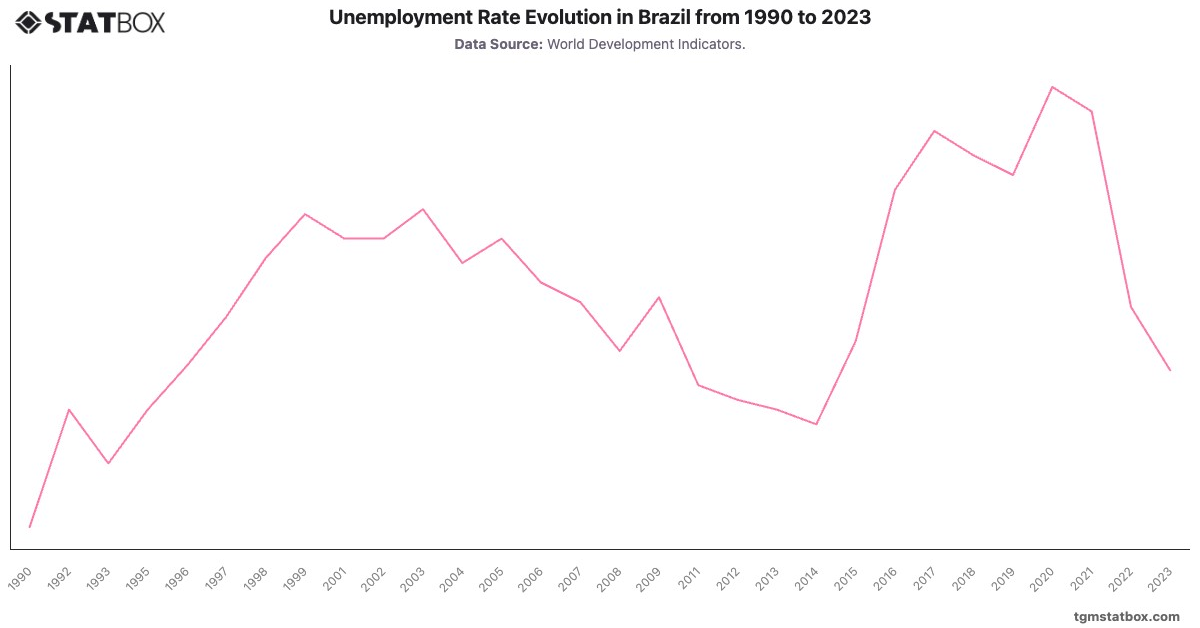
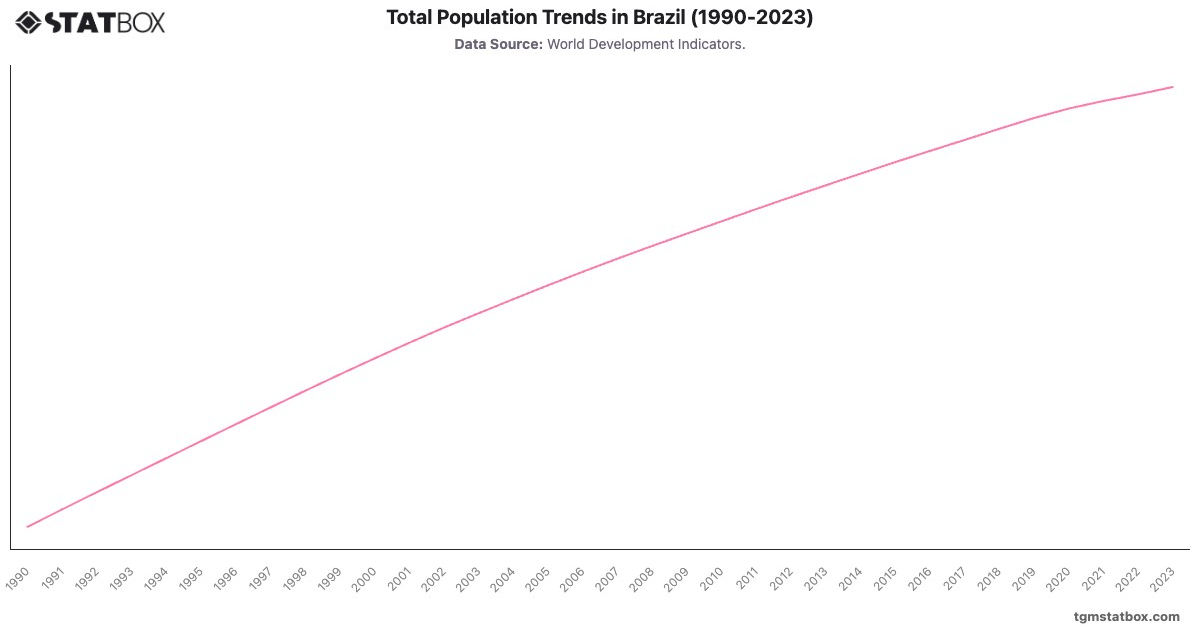
Discover additional trends and data on Brazil’s population trend, Brazil’s mortality rate trend, Brazil’s unemployment rate.