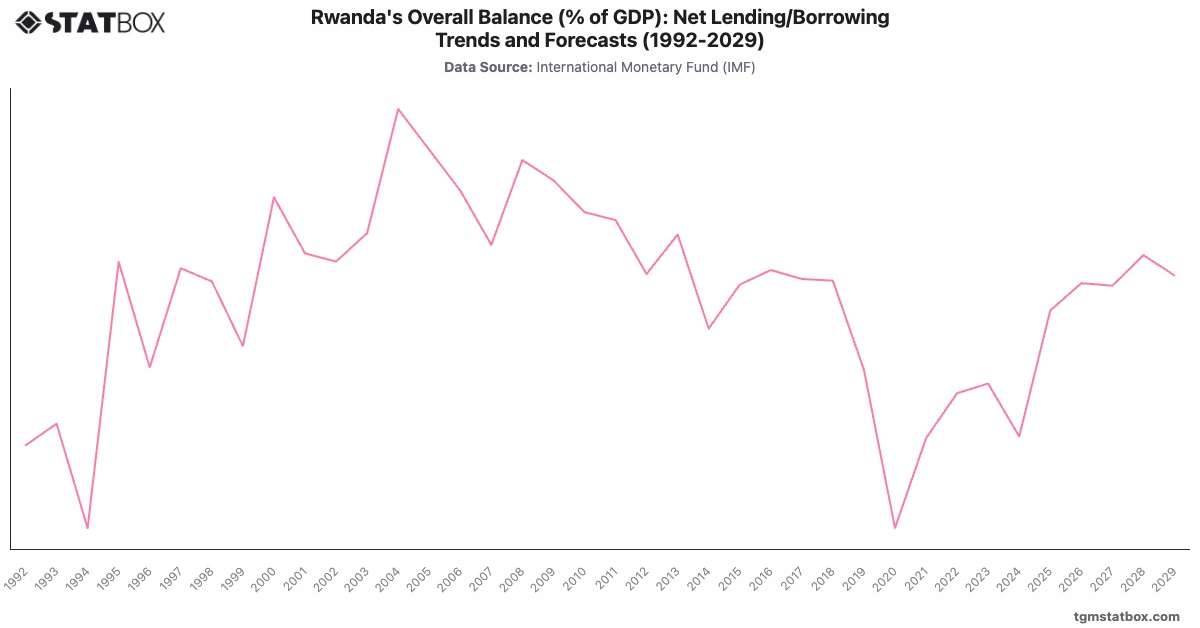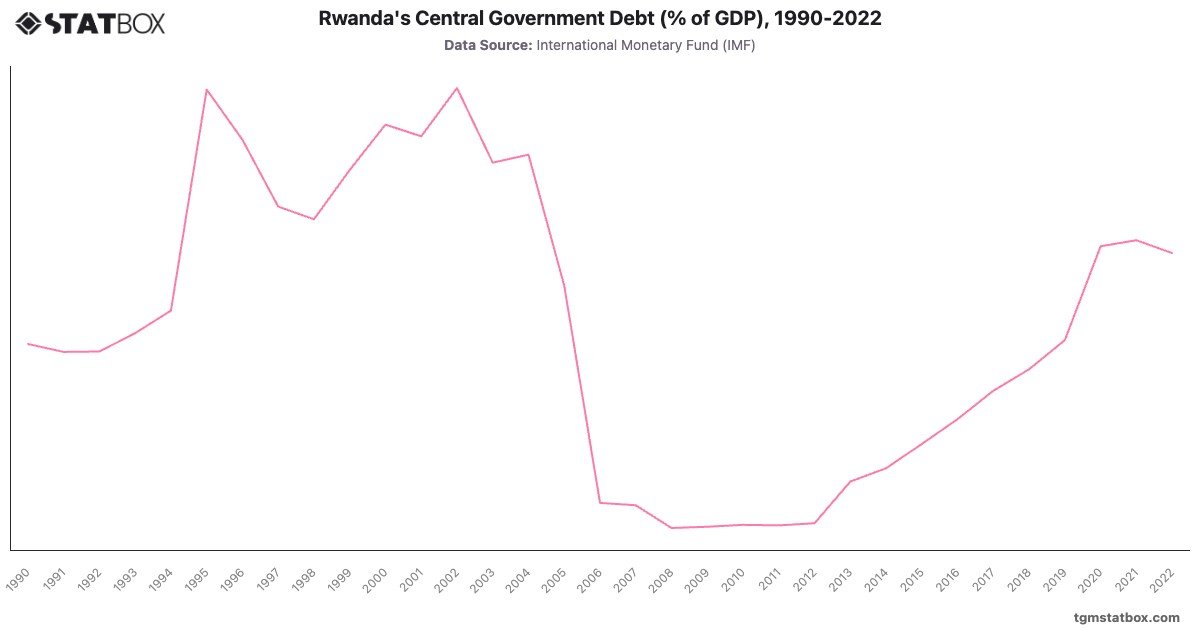
Rwanda's central government debt as a percentage of GDP has fluctuated significantly over the past few decades, influenced by various economic and political factors. In the early 1990s, the debt-to-GDP ratio hovered around , reflecting the country’s reliance on external financing to support its economic development. The 1994 genocide led to a sharp increase in debt, with the ratio peaking at in 1995 as the government sought to rebuild the nation and stabilize the economy.
Throughout the late 1990s and early 2000s, Rwanda’s debt burden remained high, but it gradually decreased as the country stabilized and implemented economic reforms. By 2006, Rwanda had significantly reduced its debt ratio to , following successful debt relief under the Heavily Indebted Poor Countries (HIPC) initiative. However, in the 2010s, the debt-to-GDP ratio began to rise again, reaching in 2019, reflecting increased borrowing to fund infrastructure projects and economic growth.
In response to the COVID-19 pandemic, Rwanda's central government debt surged to of GDP in 2020, as the government increased borrowing to support public health and economic recovery efforts. The debt level remained elevated in 2021, at , but has since stabilized at in 2022. This increase in debt is linked to ongoing investments in infrastructure and development projects, which are expected to drive long-term growth.
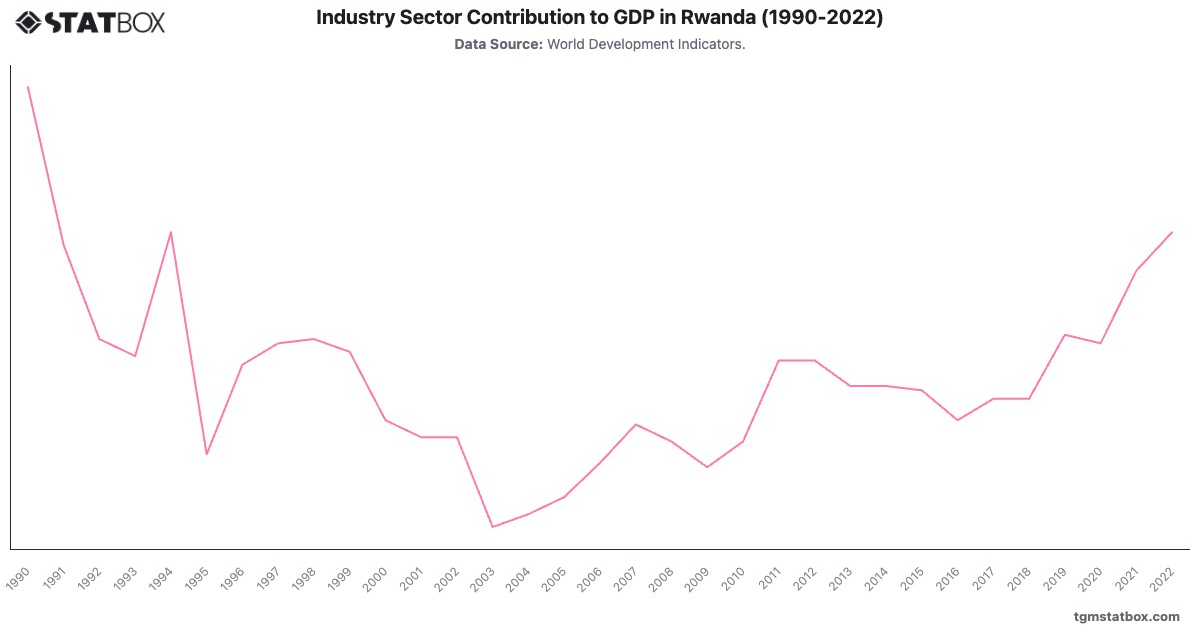
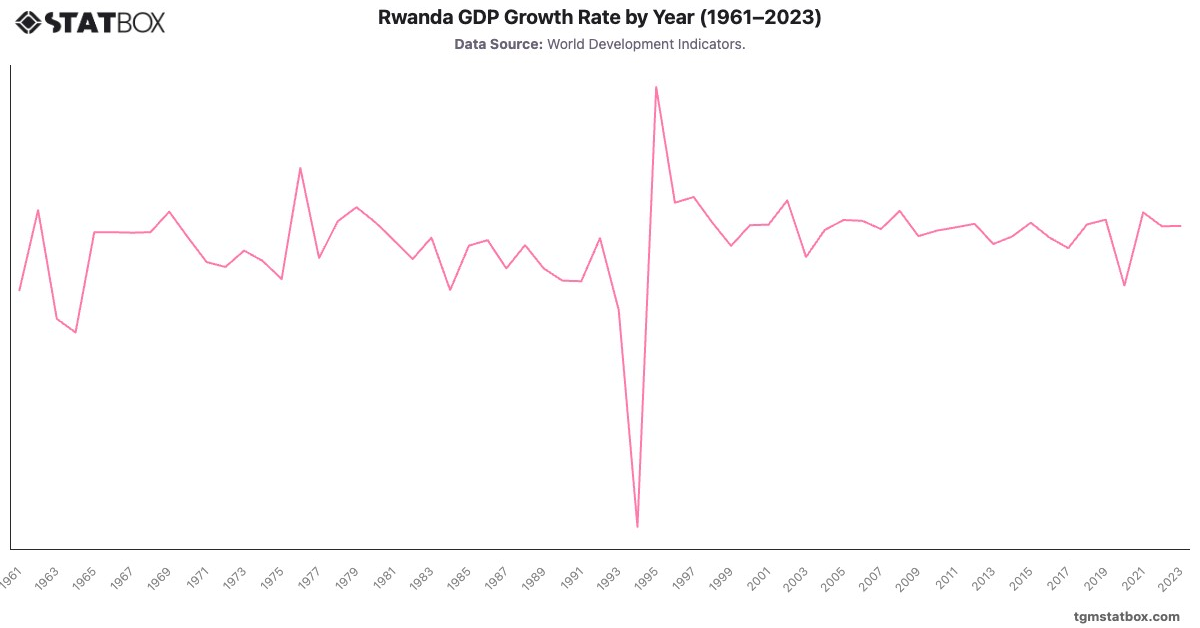
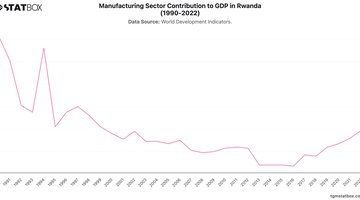
Discover additional trends and data on Rwanda’s population growth rate, Rwanda’s manufacturing share in GDP, Rwanda’s annual GDP growth rate.