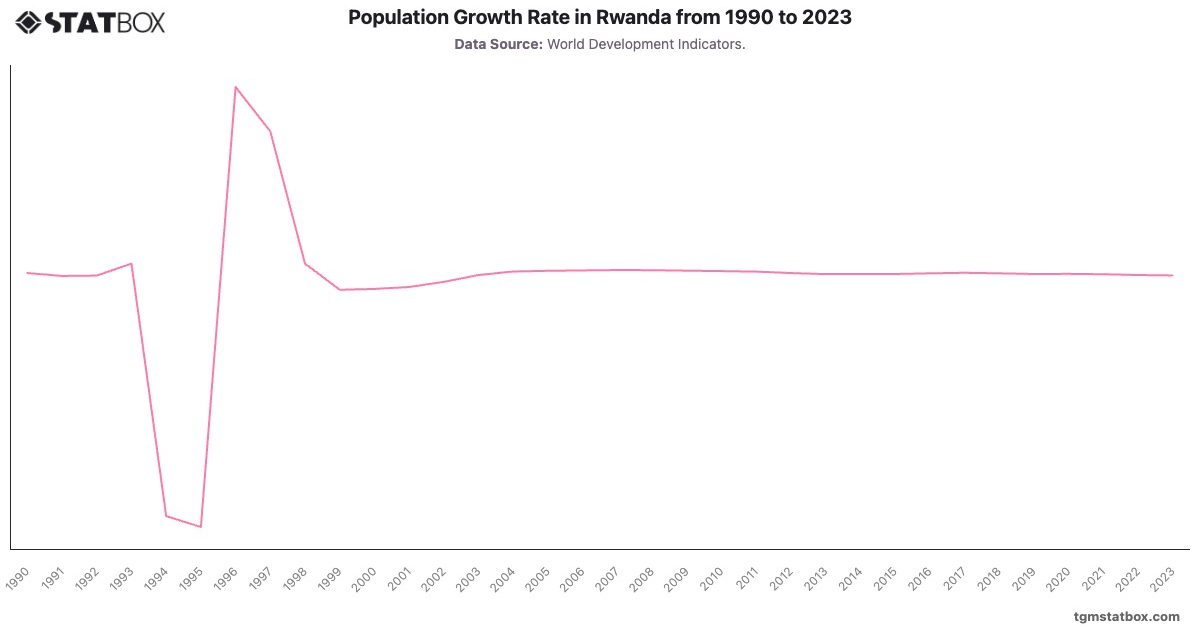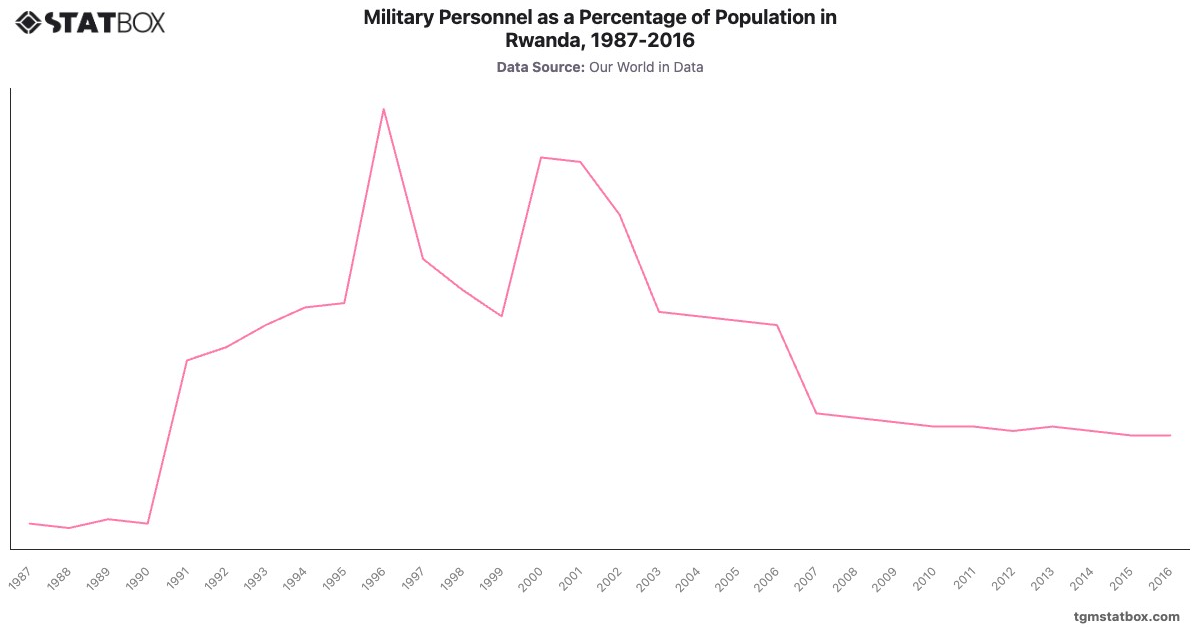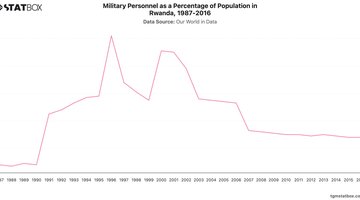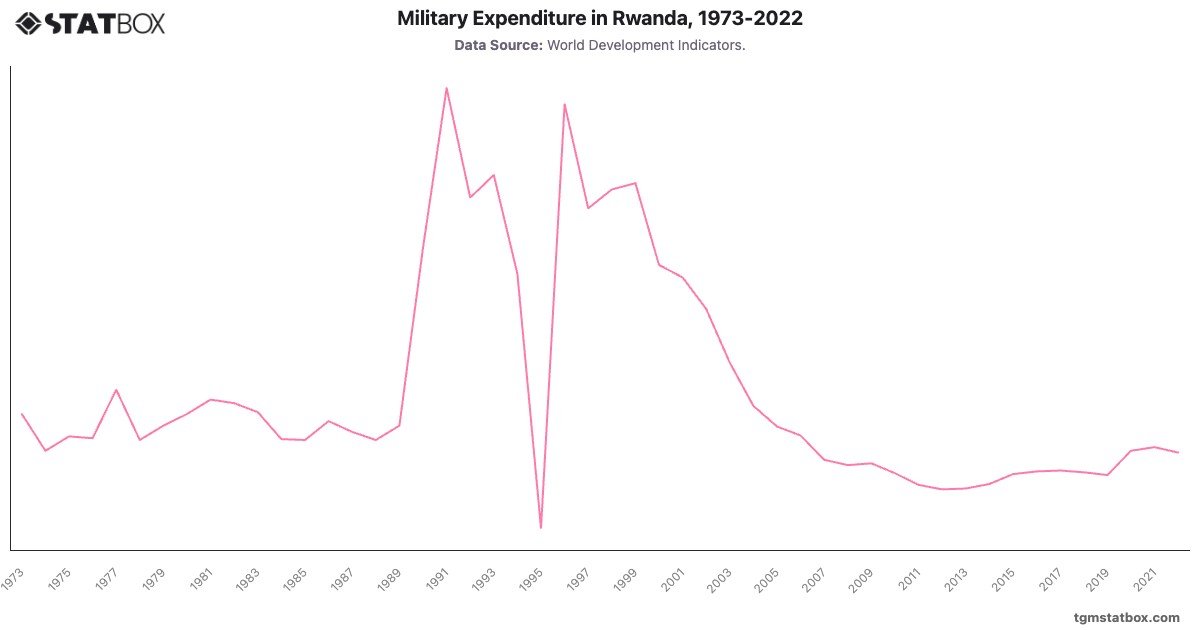
Rwanda's military spending was relatively low in the 1970s, averaging around of GDP. However, the civil war and genocide of the early 1990s led to a surge, with expenditure peaking at in 1991. This reflected heightened security concerns and the need for extensive military operations during this period.
Post-genocide recovery saw a sharp decline in spending, dropping to by 2006. Since then, Rwanda's military expenditure has remained moderate, averaging 1.2– in the 2010s and 2020s, reflecting a focus on stability, economic development, and regional peacekeeping contributions. By 2022, spending settled at , emphasizing fiscal discipline alongside national security.
Post-genocide recovery saw a sharp decline in spending, dropping to by 2006. Since then, Rwanda's military expenditure has remained moderate, averaging 1.2– in the 2010s and 2020s, reflecting a focus on stability, economic development, and regional peacekeeping contributions. By 2022, spending settled at , emphasizing fiscal discipline alongside national security.
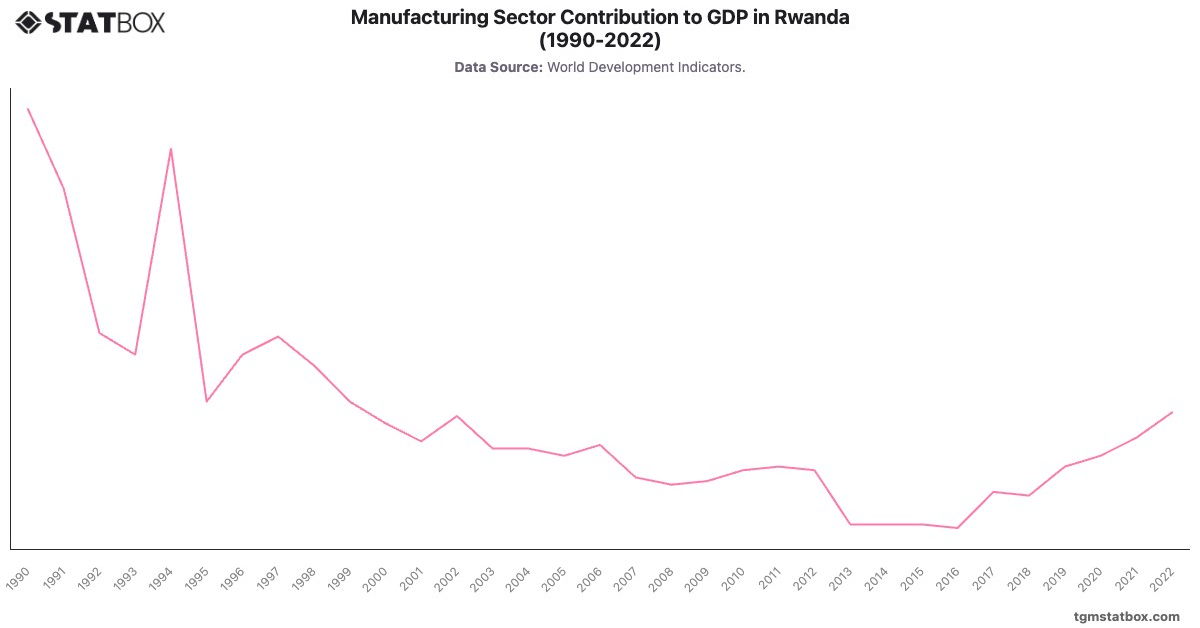
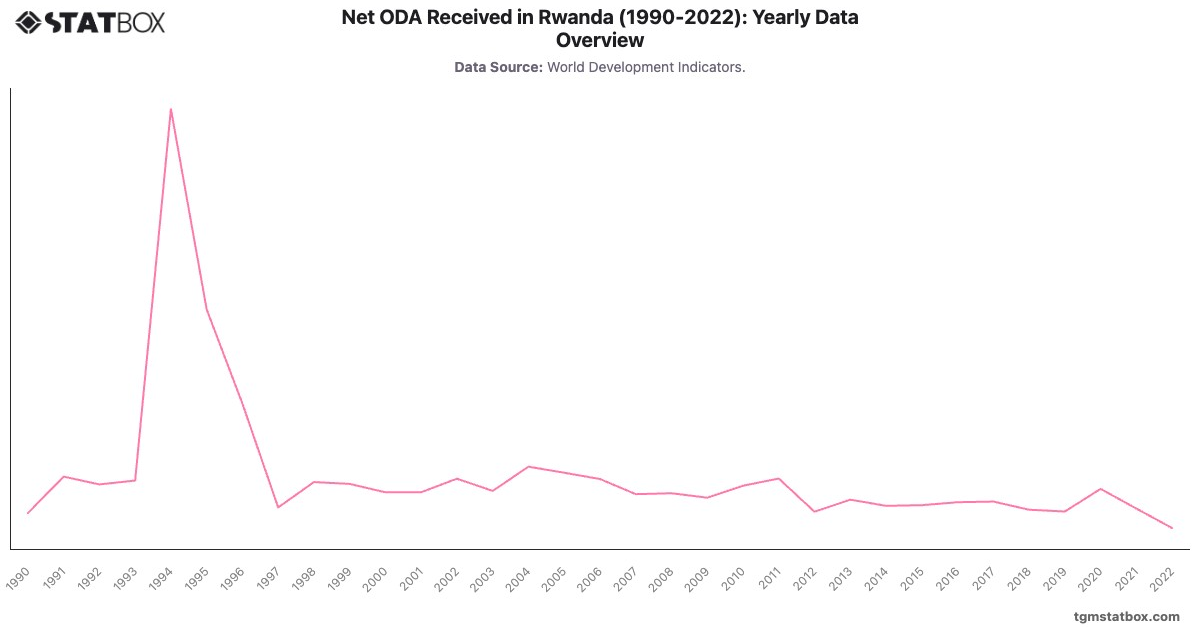
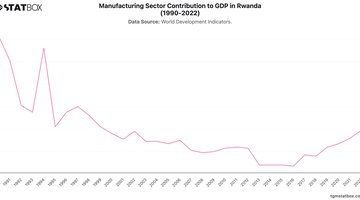
Gain a broader perspective by reviewing Rwanda’s manufacturing share in GDP, Rwanda’s mortality rate, Rwanda’s net ODA overview.