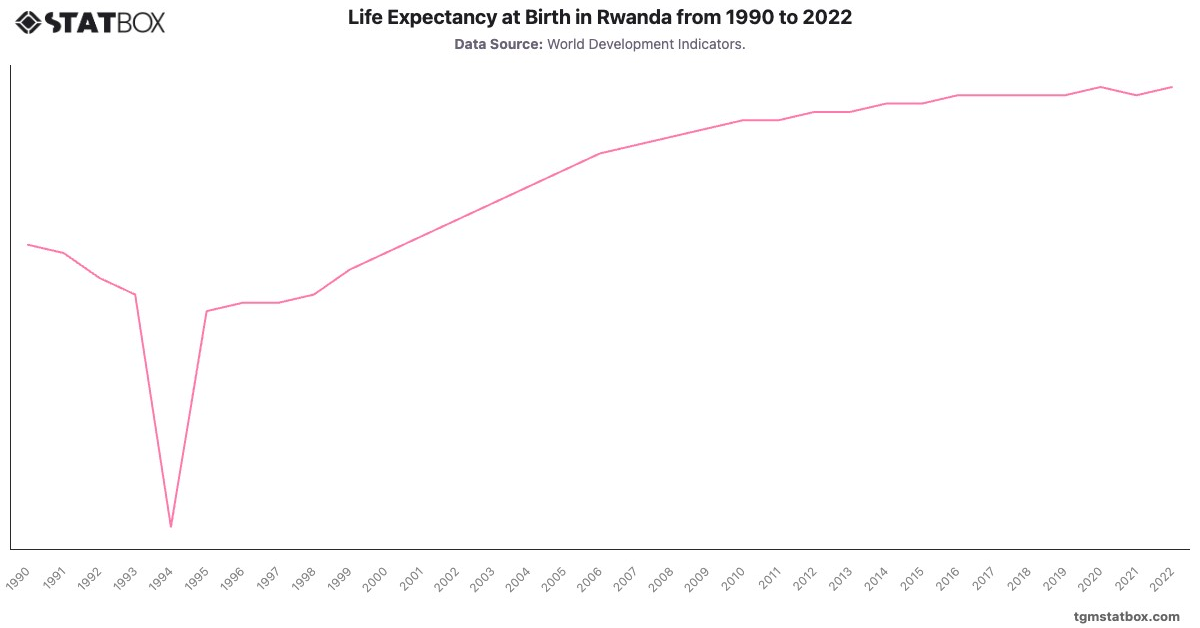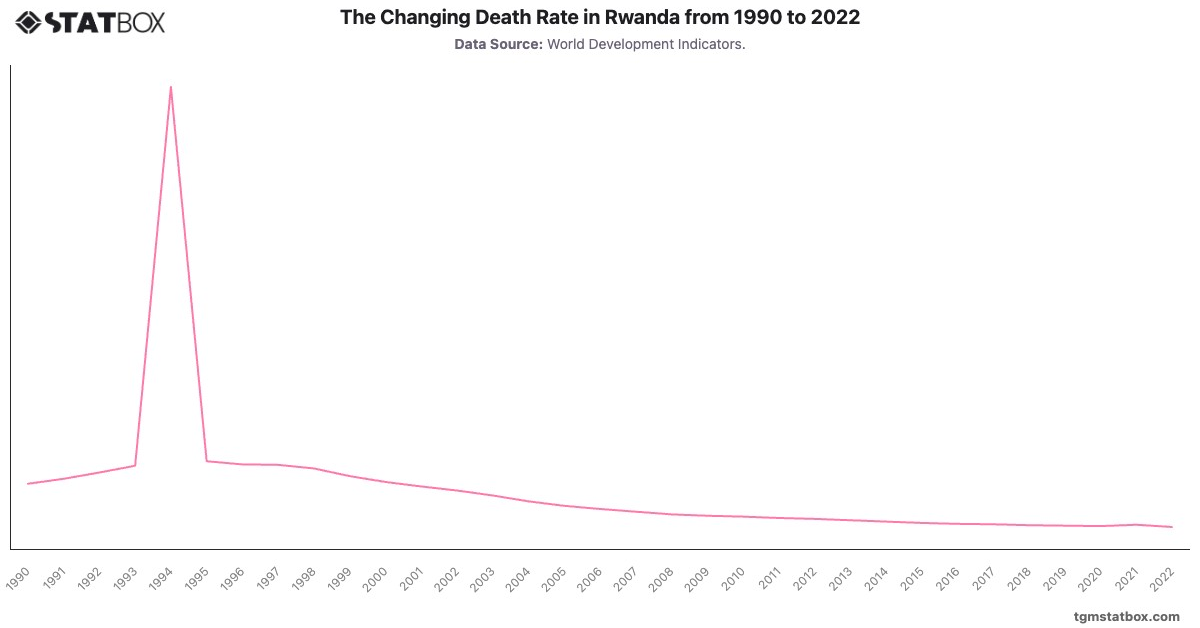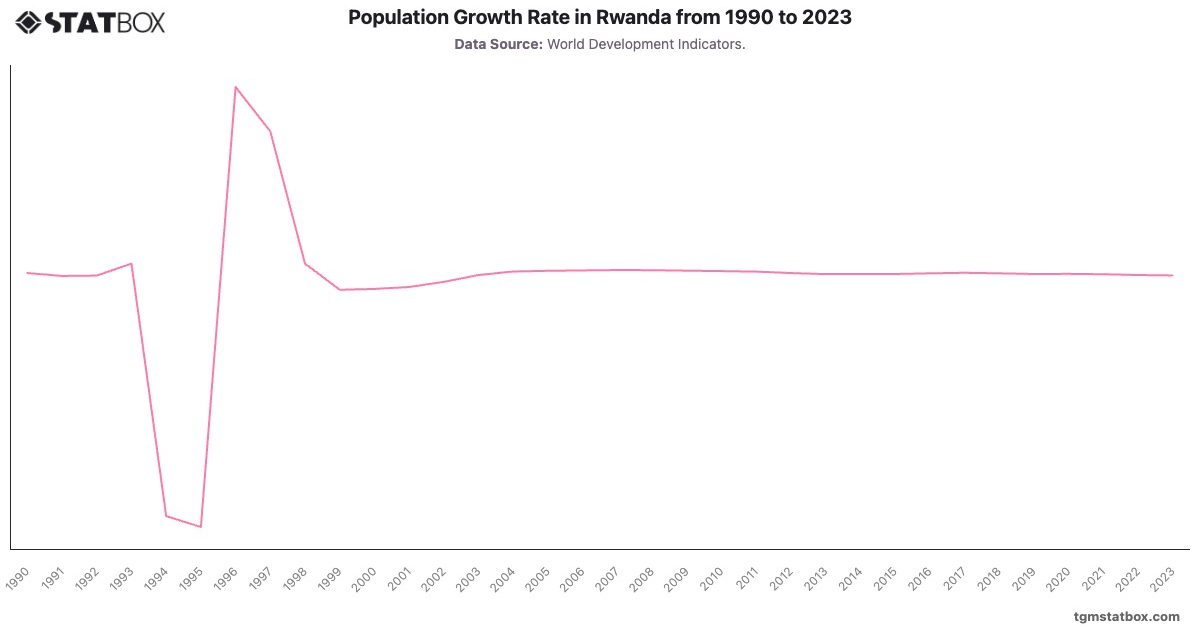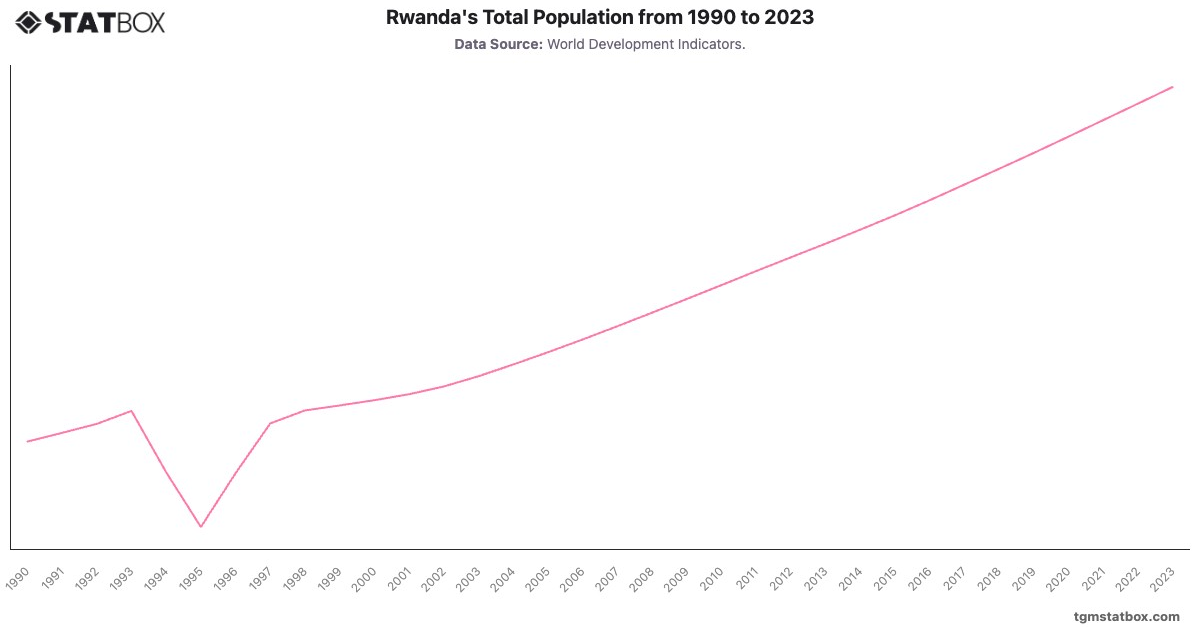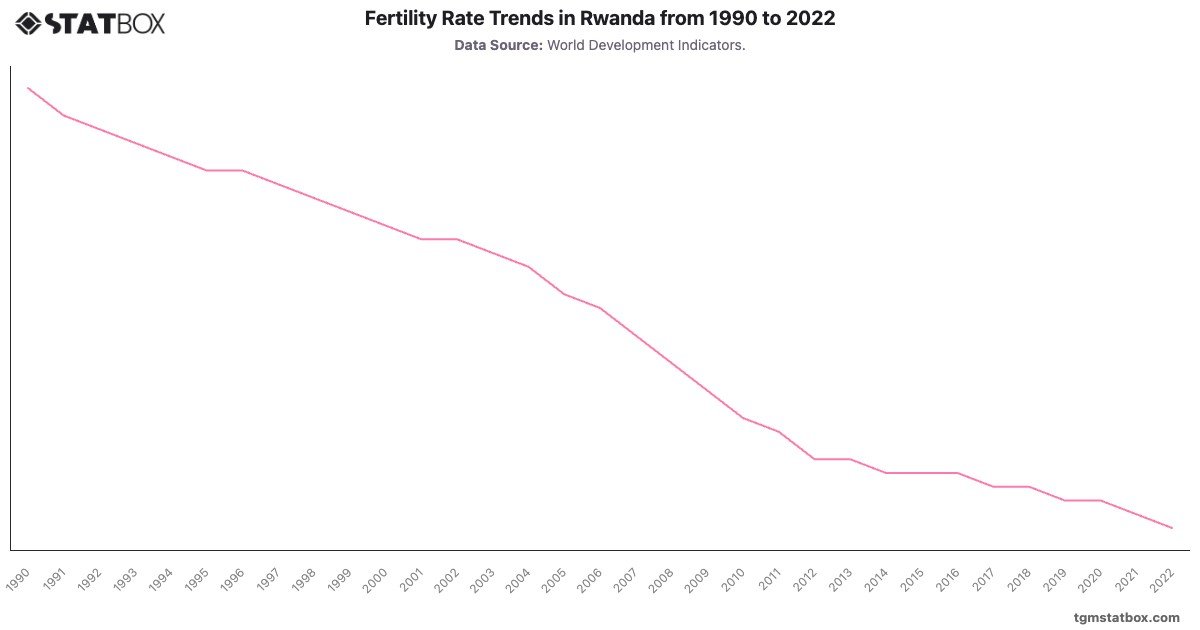
Rwanda's fertility rate fell dramatically from 6.9 in 1990 to 3.7 in 2022, representing one of the most significant declines globally. Early reductions reflected international aid and government programs focused on healthcare and family planning. The 1994 genocide briefly disrupted progress but did not halt the long-term downward trend.
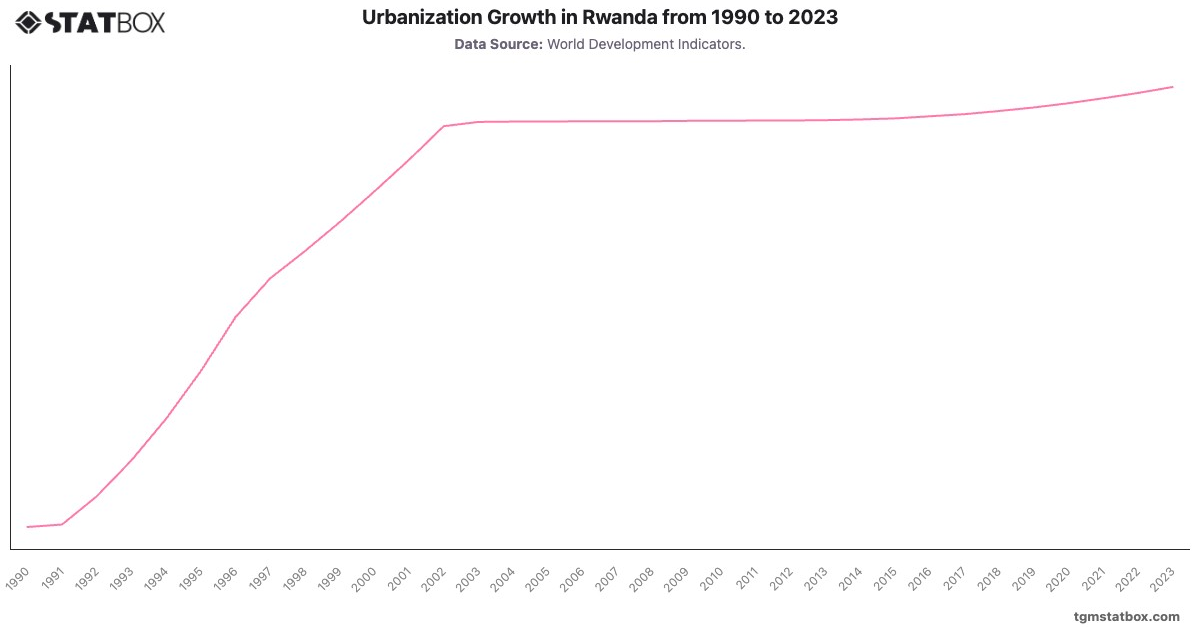
Post-2000, accelerated urbanization and economic development further reduced fertility rates. By 2020, the rate stabilized at 3.9, signaling progress in education and women's empowerment, although challenges remain in rural healthcare access.
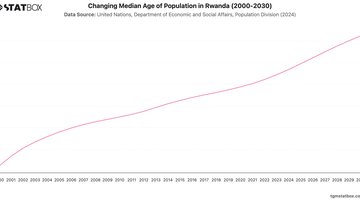
Explore related charts to gain a better understanding of Rwanda’s population figures, Rwanda’s shifting median age, Rwanda’s death rate trend.