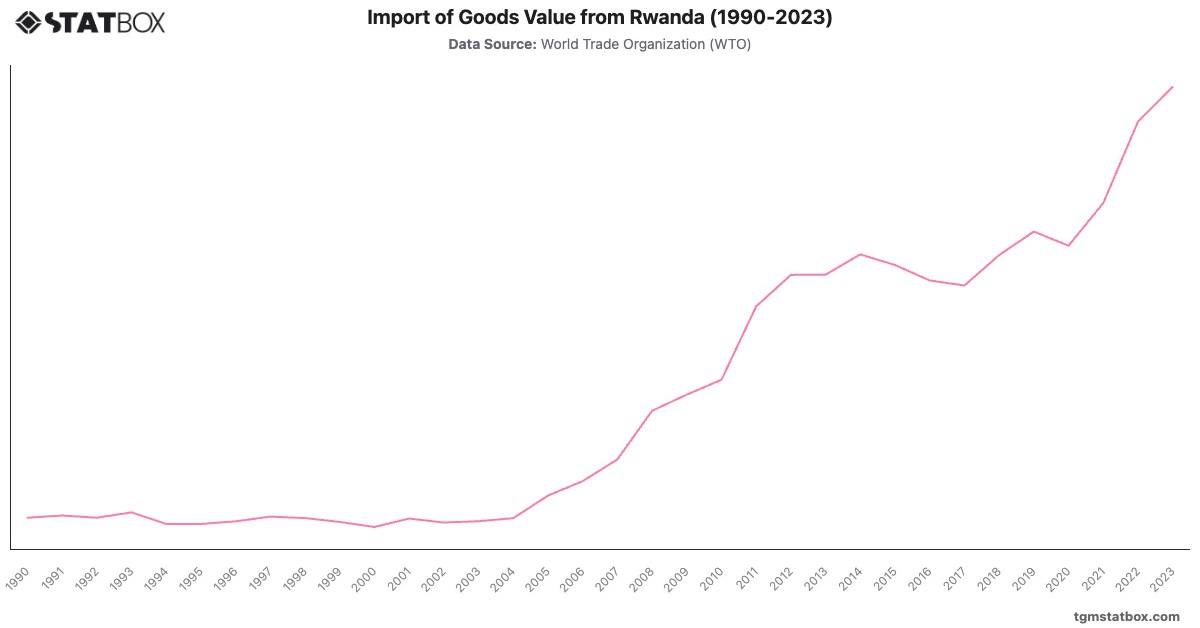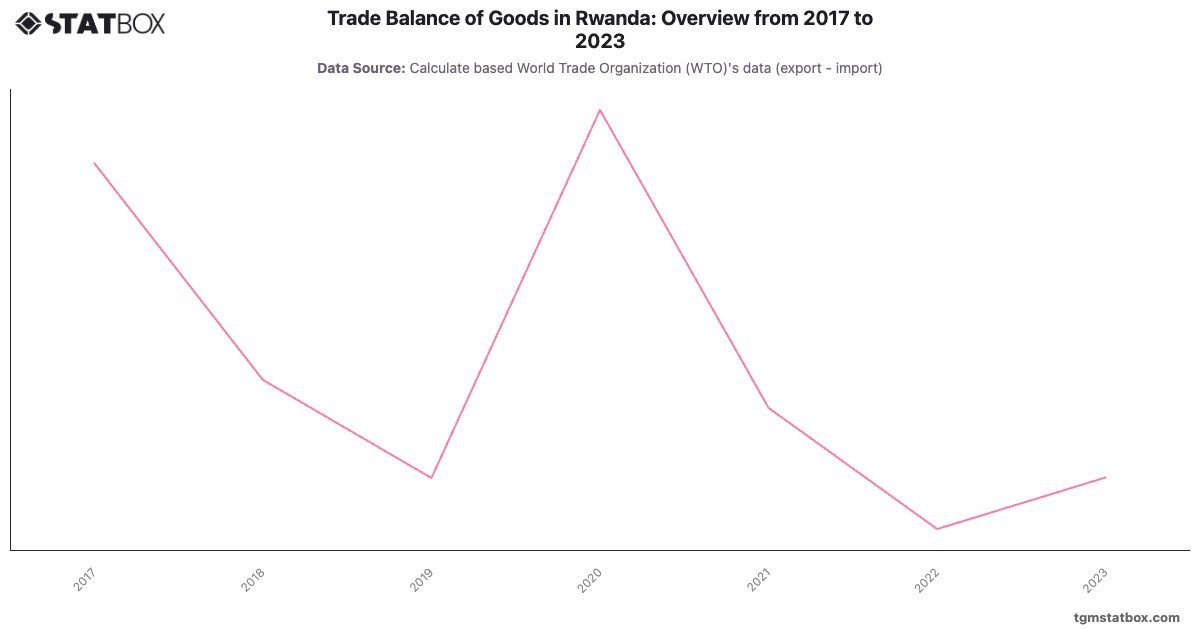
Rwanda's trade balance of goods has consistently shown a deficit, reflecting the country's reliance on imports to meet domestic demand. In 2017, the deficit stood at $1,174.83 million, widening to $1,418.28 million by 2019. This trend highlights Rwanda's ongoing economic transformation, where increasing imports of machinery, construction materials, and consumer goods supported infrastructure projects and rising consumption.
In 2020, the trade deficit narrowed to $1,133.68 million, driven by the global economic slowdown during the COVID-19 pandemic, which reduced import volumes. However, the deficit widened again post-pandemic, reaching $1,457.75 million in 2022 as economic activity rebounded, and imports resumed to pre-pandemic levels. By 2023, the deficit slightly improved to $1,417.86 million, potentially influenced by government initiatives to promote export diversification and reduce dependency on imports.
Rwanda's limited industrial base and high import dependency continue to challenge its trade balance. While exports of coffee, tea, and minerals contribute to earnings, they remain insufficient to offset import expenditures, underscoring the need for long-term strategies to boost local production and export competitiveness.
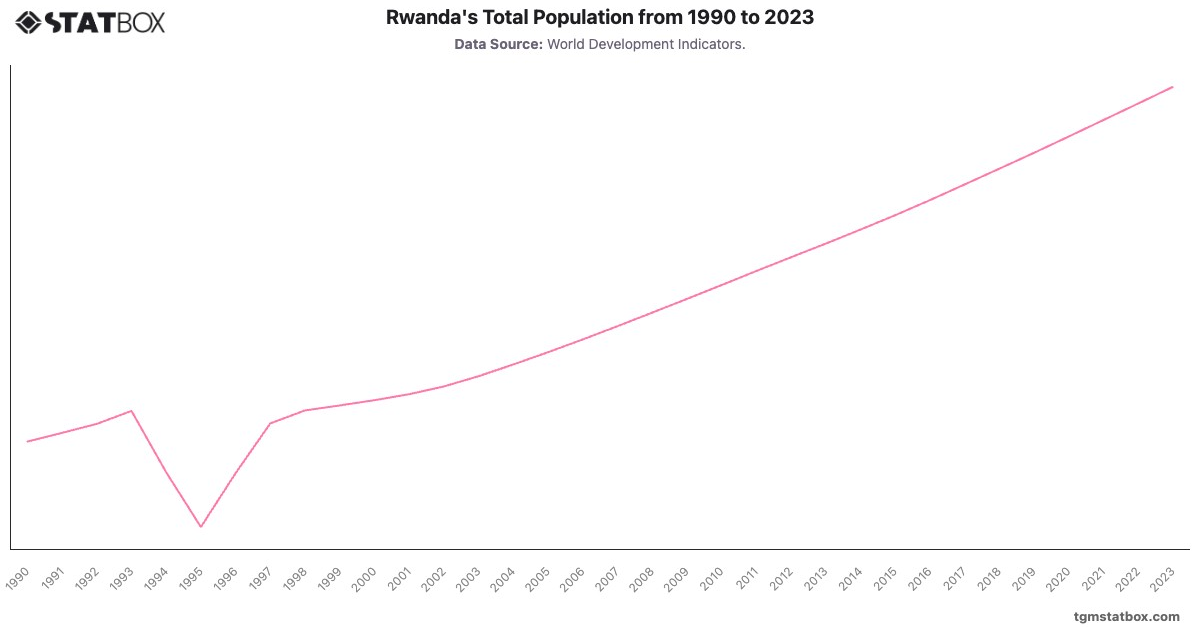
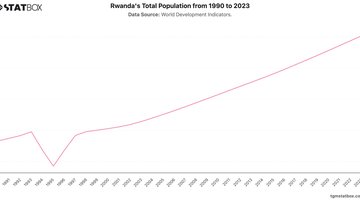
Gain a broader perspective by reviewing Rwanda's central government debt ratio, Rwanda’s population figures, Rwanda’s annual GDP growth rate.