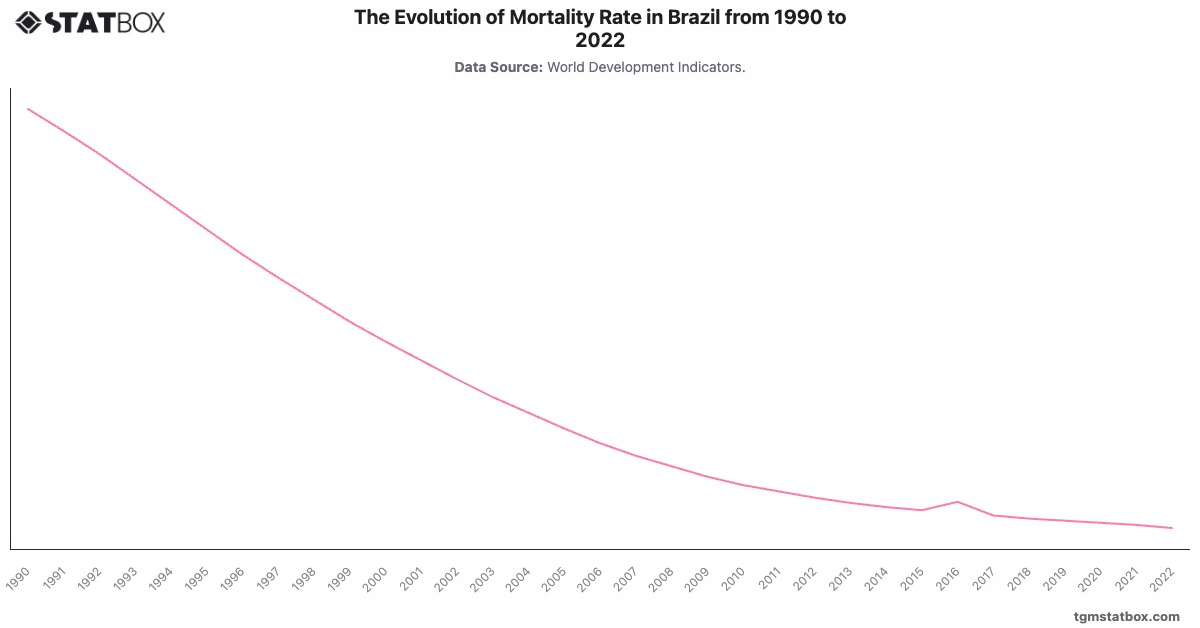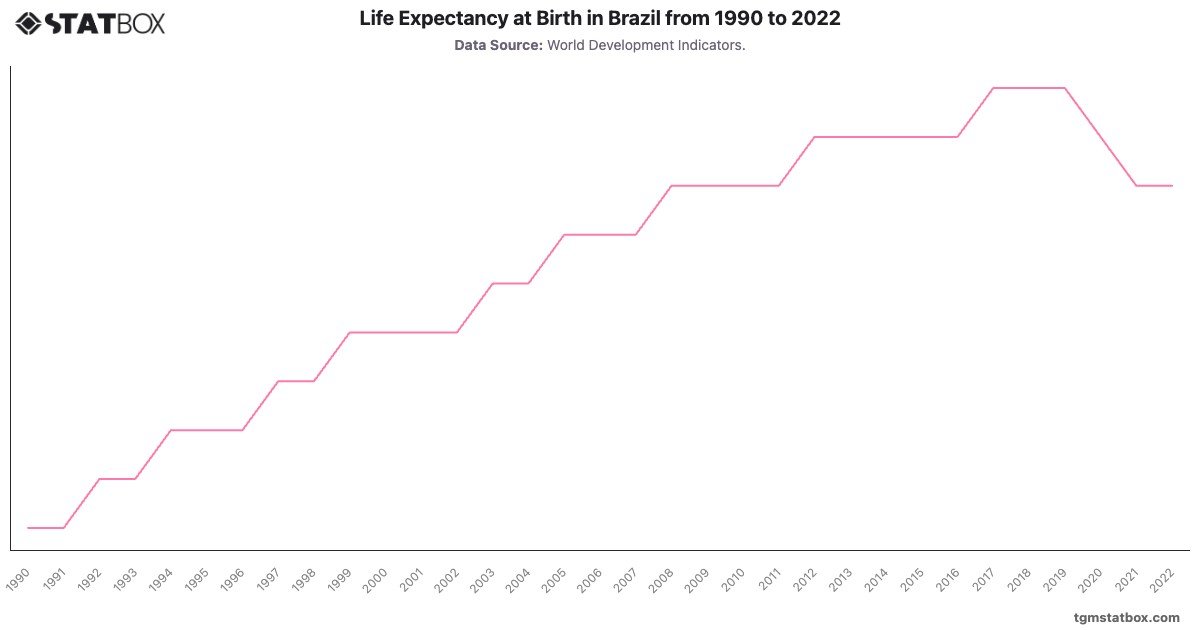
Brazil's life expectancy improved steadily from 66 years in 1990 to 75 years by 2017, driven by investments in healthcare infrastructure and social programs like Bolsa Família, which improved nutrition and access to medical services. Periods of slower growth, particularly during the 2010s, reflect economic challenges and their impact on public services. Nonetheless, Brazil's focus on reducing infectious diseases and expanding healthcare access played a key role in long-term improvements.
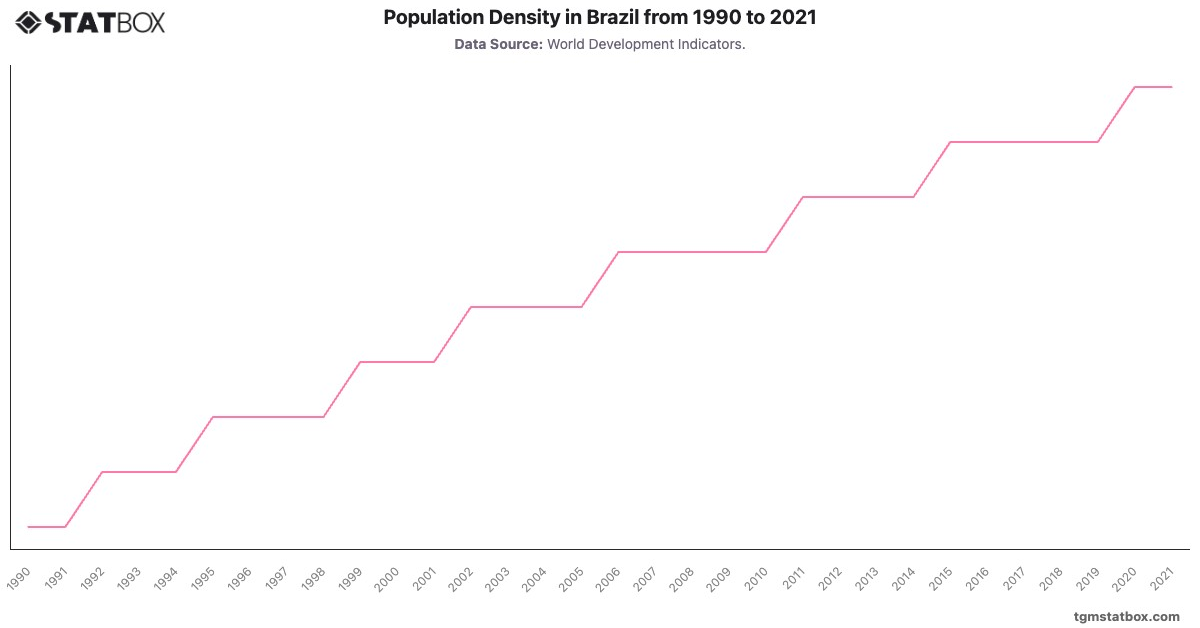
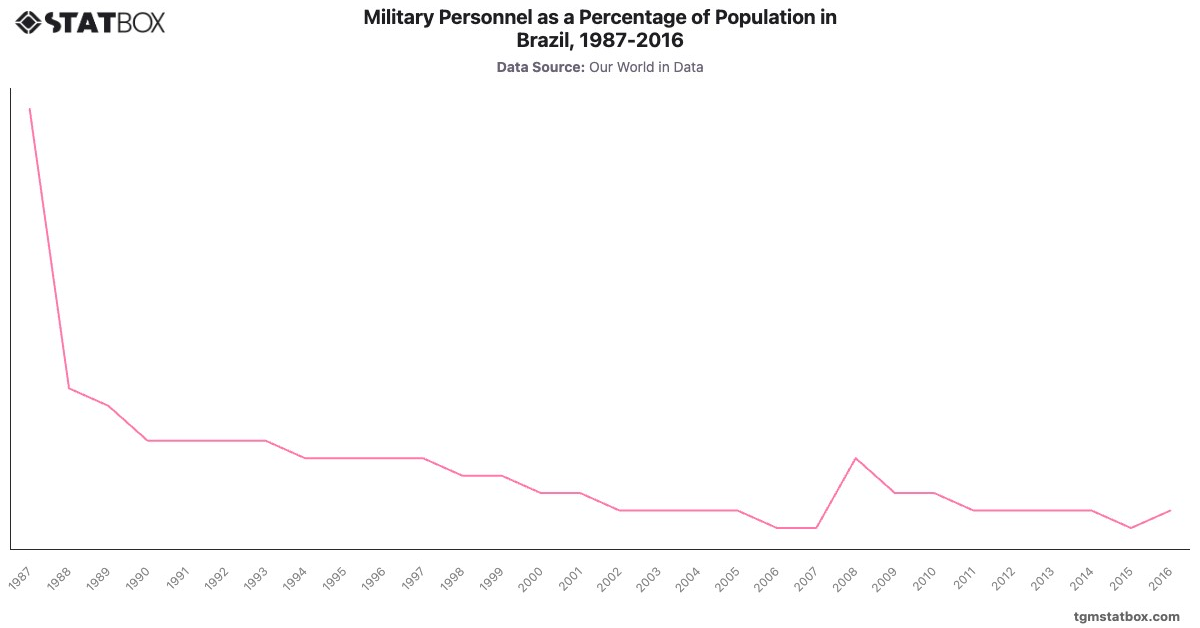
Find out more through related statistics on Brazil’s population trend, Brazil’s military personnel proportion, Brazil’s population density.